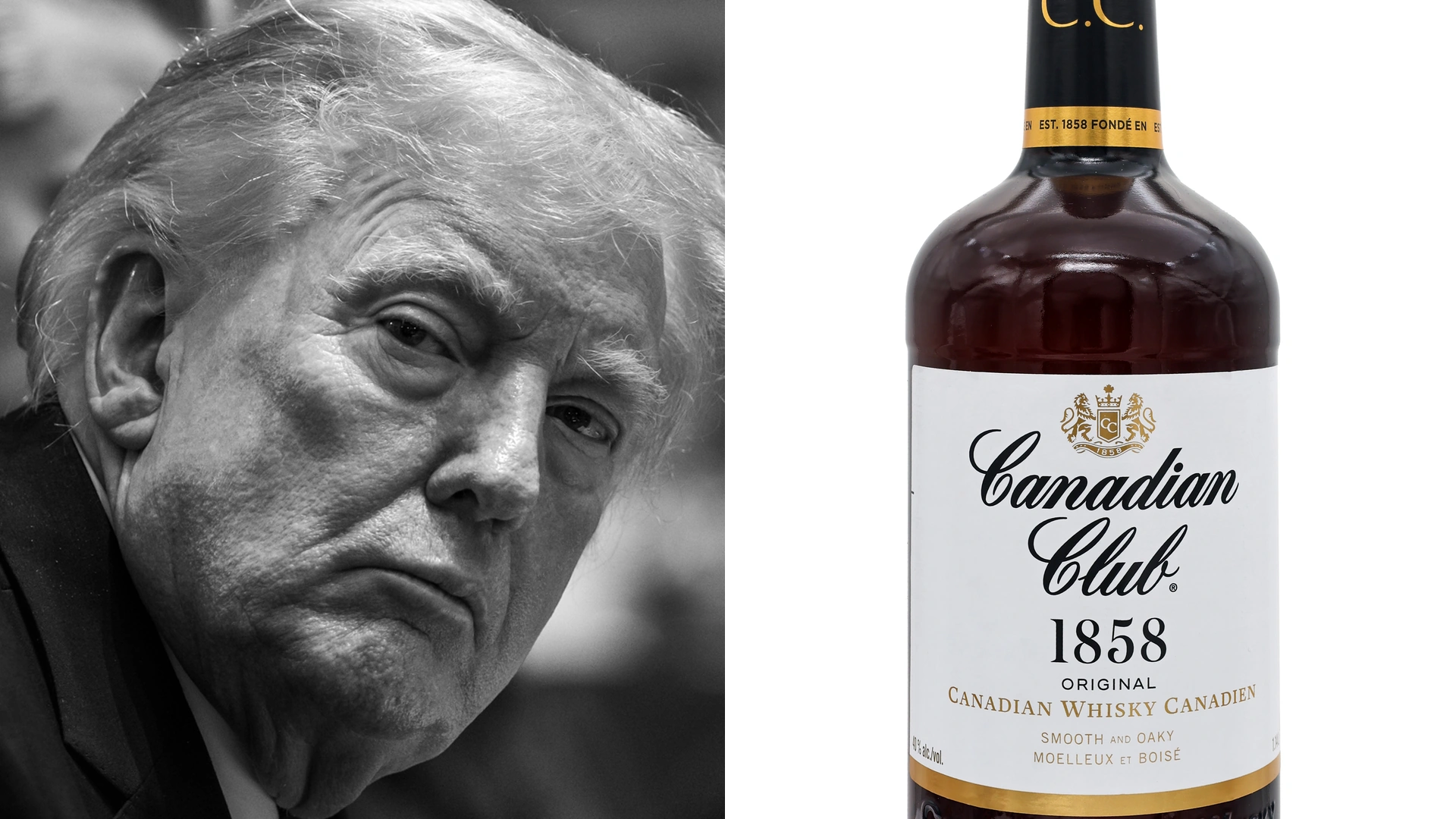
WASHINGTON — President Donald Trump signed five proclamations Tuesday barring a long list of Canadian goods — most packaged alcohol, whey and molasses products, and motorcycles with engines over 800 cubic centimeters — from entering the United States at 12:01 a.m. Sept. 29.
They land hours after Canada’s counter-tariffs took effect: rates of 15, 25 and 50 percent covering $27.6 billion in U.S. imports, matching the American rate on each product, according to Canada’s Department of Finance. Canada is Pennsylvania’s largest foreign customer, taking $13.9 billion in goods in 2025, or 27 percent of the state’s exports, according to the Office of the U.S. Trade Representative.
Three of the five, listed on the White House actions page, are the bans: alcohol, dairy and motor vehicles. The other two redraw the duty lists underneath, effective Sept. 15: the alcohol order’s annex adds more than 20 Canadian cheese lines, cattle hides, fox and mink furs, and motorboats and yachts to the 50 percent tariff.
The alcohol ban’s annex is broad. It bars malt beer, grape wines in containers from under two liters to over 10, vermouth, cider, sake, whiskies, rum, gin, vodka, tequila and liqueurs — including bourbon and Irish and Scotch whiskies bottled or blended in Canada.
Much of the list covers only alcohol “packaged in bottles, cans, boxes, kegs, or other similar direct-to-consumption containers.” Canadian whisky shipped in bulk, the form U.S. bottlers buy it in, is not in the ban annex; the Sept. 15 order instead moves the bulk lines onto the duty list, taxed at 50 percent rather than blocked.
In Pennsylvania, a control state, all of it moves through the Liquor Control Board, the sole wholesaler and retailer of wine and spirits.
The dairy annex runs to 14 tariff lines: whey and molasses—plus one that is neither: non-alcoholic beer.
The motorcycle annex is a single line, 8711.50.00, for motorcycles and mopeds with a piston engine over 800 cc. Nothing smaller is listed, and nothing electric — which exempts the two motorcycles Canada’s best-known powersports maker now builds: BRP’s Can-Am Pulse and Origin, designed in Valcourt, Quebec, and assembled in Queretaro, Mexico, the company said.
Trump acted under Section 338 of the Tariff Act of 1930, which lets a president exclude a country’s goods if it “maintains or increases” discrimination against U.S. commerce. The proclamations recount 50 percent duties proclaimed July 20 and effective Aug. 19, a three-day suspension after Canada committed to remove the discrimination, and a finding that on Aug. 21 Canada “reneged on its commitment, ceased negotiating in good faith.”
Canada’s account differs. The U.S. “proposed new terms that were not in Canada’s best interest,” its Department of Finance said in an Aug. 27 release, and Canada “suspended negotiations rather than accepting a bad deal.”
The alcohol order cites one new trigger by name: Saskatchewan’s 50 percent levy on U.S. alcoholic beverages, announced Aug. 27 and effective Tuesday. The order says Saskatchewan is one of two provinces that never banned U.S. alcohol outright; the other is Alberta, CKOM reported.
Goods imported before Sept. 29 but not yet withdrawn from warehouse stay at the 50 percent rate. A severability clause applies that same duty if a court strikes the ban.
No president had used Section 338 before July, Fortune reported. “This law is literally a blank canvas because it’s never been litigated,” Ryan Majerus, a King & Spalding partner and former U.S. trade official, told the magazine.
Prime Minister Mark Carney did not address the bans in his posts Tuesday, writing that Canada’s “Plan A” is to “build our strength at home.” Trade Minister Dominic LeBlanc said formal negotiations are “not taking place,” and a spokesman told The Associated Press that officials remain in contact.
After Trump posted on Truth Social that Bombardier products “aren’t good enough” to sell here, Sen. Roger Marshall of Kansas wrote that he would fight to keep the company’s “over 1,200 Kansas jobs.”