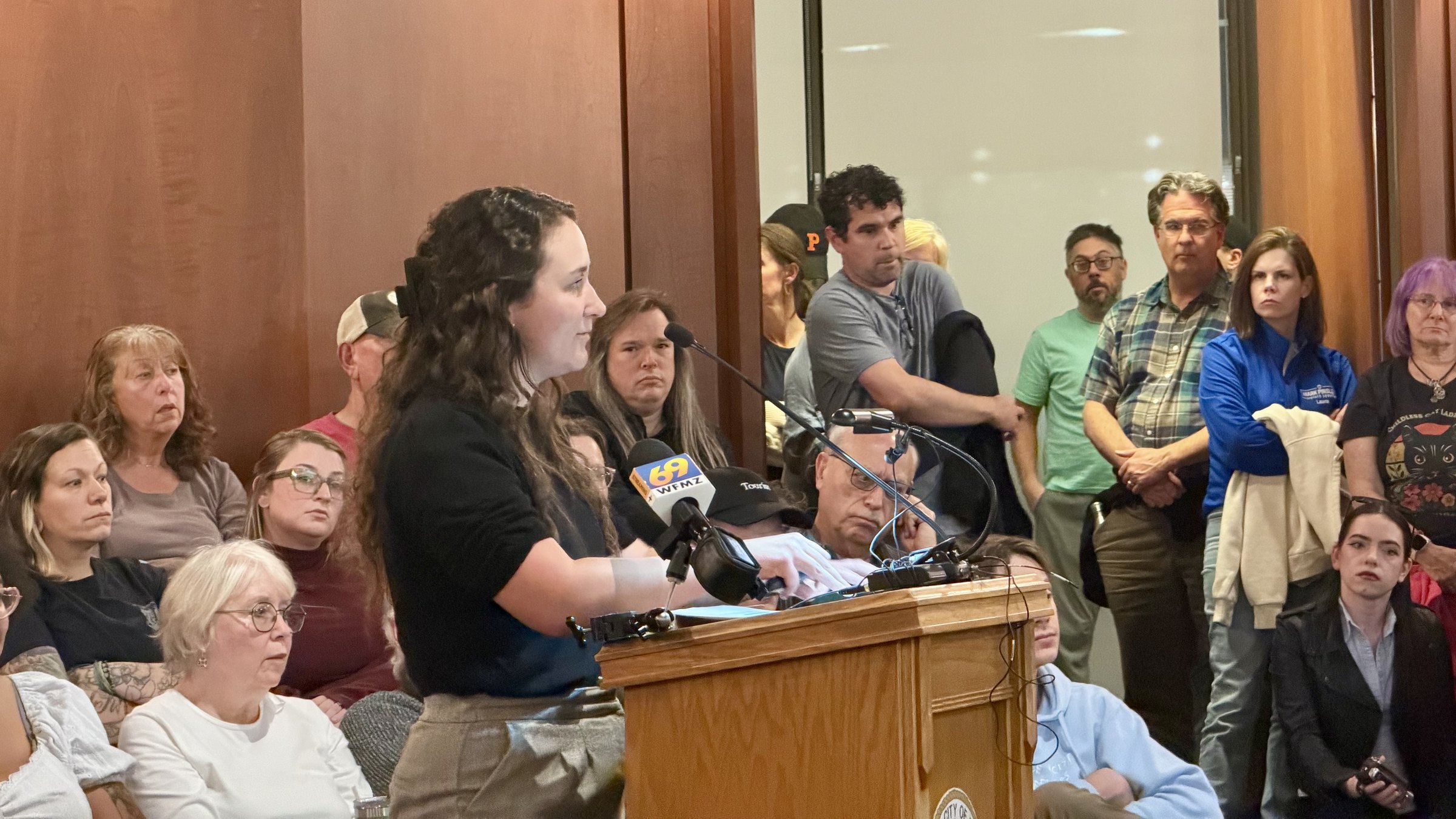
BETHLEHEM, Pa. — Bethlehem City Council voted 7-0 Tuesday to give initial approval to the city’s first zoning rules for data centers, which face a final vote Oct. 20.
Bethlehem’s zoning code currently treats a data center like any other industrial use, with no added limits, Planning and Zoning Director Cathy Fletcher told council. The new rules would add a public hearing, require studies on water, power, noise and heat, and keep data centers at least 1,000 feet from homes and schools.
The rules will not cover the one data center already proposed in the city, a project on Industrial Drive that could not be built under them.
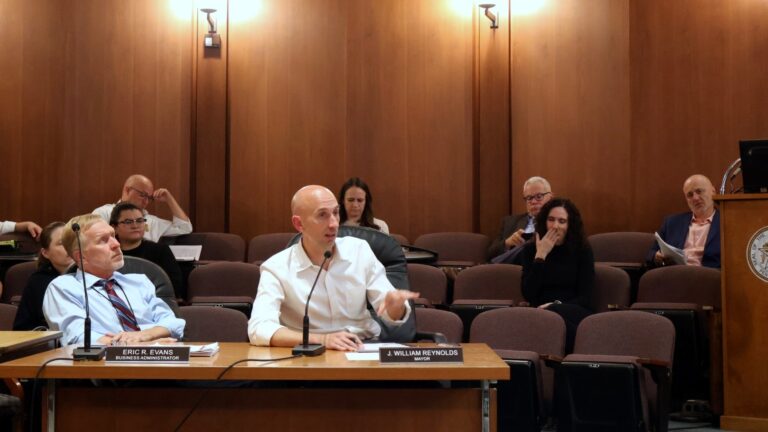
During the nearly three-hour hearing, Councilwoman Jo Daniels said the rules fall short in the areas that matter most to residents. Other council members argued that passing them now is better than leaving data centers unregulated.
Most of the 24 people who spoke during public comment urged council to pass the rules and strengthen them over time.
Daniels and Councilman Bryan Callahan both said during the hearing that they did not expect to vote for the rules. Both voted yes.
The Industrial Drive project
The proposed data center is a two-story building with a 65,000-square-foot footprint at 2184 Industrial Drive, replacing the former Crowder Service Center building along Route 22. Boyle Construction and Paxos, both of the Lehigh Valley, and Tensor IQ of Newark, Del., proposed the project.
The site is in the city’s Planned Industrial district, where the ordinance would not allow data centers. City zoning and parcel maps also show every part of the 6.75-acre lot is within 1,000 feet of residentially zoned property.
Because its application was filed before the amendment, it will be reviewed under the current code, Fletcher said.
The project goes before the city Planning Commission at 5 p.m. Nov. 12 in the Town Hall Rotunda, where the public can comment, Council President Rachel Leon said.
That local review carries added weight under a state order. Gov. Josh Shapiro signed an executive order on data centers on Aug. 18. Under it, the state Department of Environmental Protection will not issue a permit unless the project “has received all required local approvals.” The order also bans nondisclosure agreements, which keep project details secret, on data center projects.
What the rules do
State law requires every municipality’s zoning to allow every legitimate land use. That means Bethlehem cannot ban data centers or write rules so strict that one could never be built.
Under the amendment, data centers would be allowed only in the city’s Industrial district, not its Planned Industrial district, and only by special exception. That means an applicant would need approval from the Zoning Hearing Board at a public hearing, in addition to the usual Planning Commission review.
The city Planning Commission voted 4-0 on Aug. 25 to recommend the rules. In a review letter, the Lehigh Valley Planning Commission called them “a thoughtful and intentional response to a complex land use.”
Applicants would have to submit several studies and plans with their application, including an environmental study, water and sewer approvals, an energy plan, an emergency plan, a decommissioning plan, a heat plan, a lighting study, and noise studies before and after construction.
Noise would be measured at the property line. The post-construction noise study would be due one to 12 months after the city clears the building for use.
Buildings would have to sit at least 80 feet from property lines, up from 20 feet for other industrial uses. The setback grows to 200 feet next to any non-industrial lot.
It grows to 1,000 feet from a residential district or an existing home, school, day care, park, hospital, or recreation center. That is 50 times the current 20-foot minimum.
Larger buildings would also require larger lots. Fletcher said a data center under 50,000 square feet could cover no more than 50% of its lot, down from 65% for other industrial buildings. The limit tightens as buildings grow, she said.
Councilwoman Hillary Kwiatek later returned to the rule to walk the audience through it. The rule means “the bigger the building gets, the even huger the lot size has to be,” Kwiatek said.
Under the ordinance, each square foot of building between 50,000 and 250,000 square feet needs 3 more square feet of land. Above 250,000 square feet, each added square foot needs 5 more. By that math, a 250,000-square-foot data center would need a lot of about 16 acres, and a 500,000-square-foot one would need about 45 acres.
Where the rules stop
Fletcher said the city cannot require yearly reports once a data center opens. Zoning Officer David Taylor said post-approval inspections would largely be driven by complaints.
Councilman Justin Amann said a zoning fine of $500 a day “is not going to be an issue” for a data center operator. City Solicitor Jack Spirk said the city could also seek a court injunction to stop a violation.
Jill Seitz, chief community and regional planner for the Lehigh Valley Planning Commission, said state law limits what zoning can cover. The state Department of Environmental Protection oversees air quality, and the Public Utility Commission oversees electric service, she said.
A regional planning commission guide on the meeting’s materials table, “5 Questions for Legally Defensible Data Center Regulations,” makes the same point. It says local rules hold up best when they address measurable effects, such as noise, lighting, building height, and setbacks.
The guide cautions municipalities against rules that try to set electric rates or decide how reliable the power grid must be. It also says Pennsylvania courts can strike down a rule that allows a use on paper but makes it impossible in practice.
Water and Sewer Resources Director Ed Boscola said the city’s water system has had extra capacity since Bethlehem Steel, which used about 8 million gallons a day, closed. The city’s two reservoirs hold about 10 billion gallons and serve Bethlehem and parts of 12 nearby towns, he said.
The Industrial Drive developers estimate their cooling system would need about 3 million gallons of water and 1 million gallons of glycol to fill.
Two critics vote yes
“I’m against the data centers. I don’t think I’m going to be voting for it,” Callahan said during the hearing.
Callahan asked whether council could table the ordinance for more research. Leon said that motion would have to come during the regular meeting that followed the hearing. No one made a motion, and council passed the ordinance without further discussion.
Daniels said the rules set clear limits for noise, lighting, height, and setbacks, but none for environmental harm, water use, or energy.
“But this here, you just gave them the alley-oop. You just gave them a slam dunk to get a data center in Bethlehem,” Daniels said. “And for that alone, I definitely can’t vote to move this forward.”
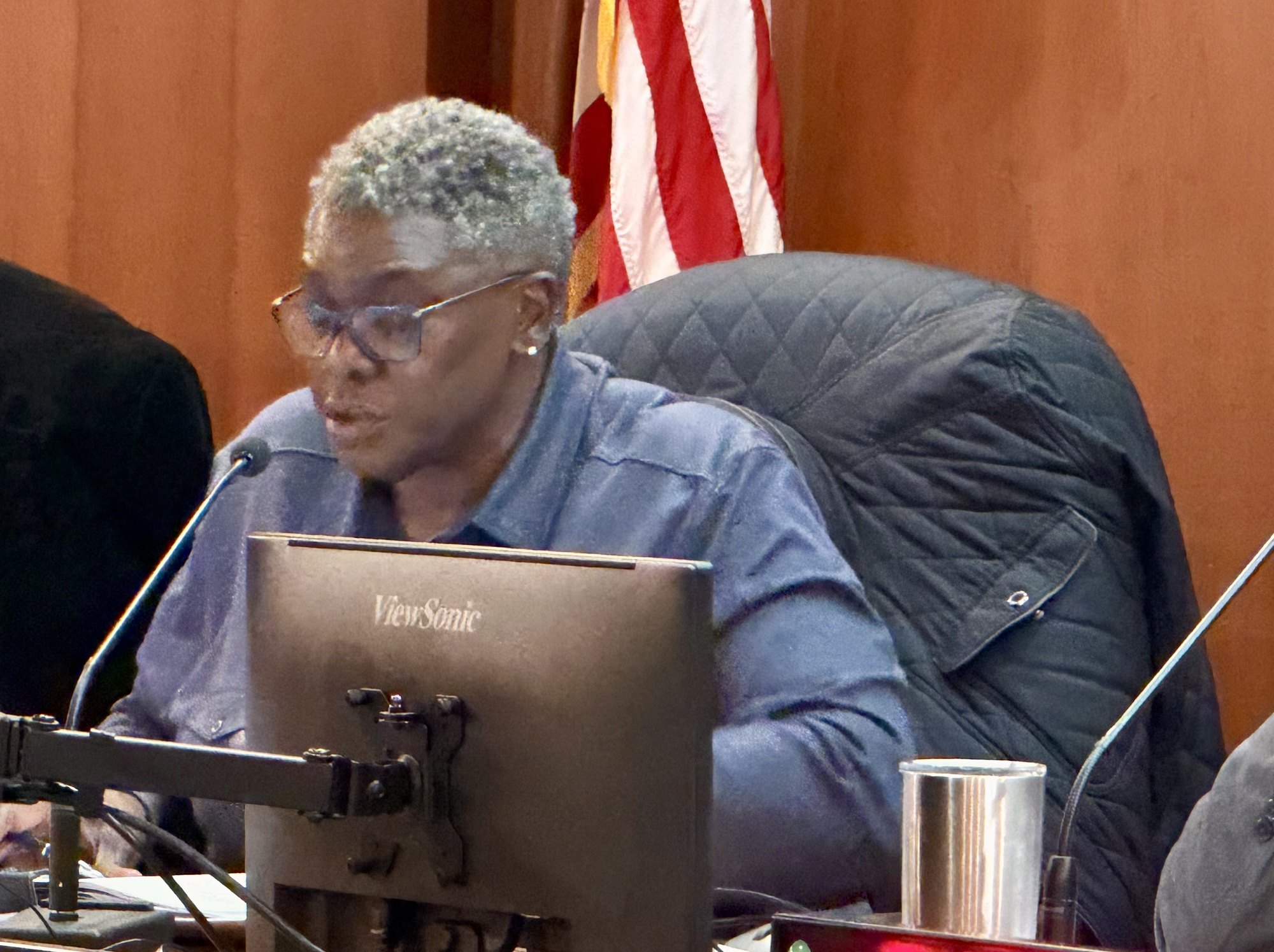
Vice President Colleen Laird said she knew residents wanted “a bold council.” But she warned that voting the rules down to push for tougher ones would give developers time to file plans under the current code.
“There are old foragers, and there are bold foragers, but you will not find an old, bold forager,” Laird said. “We want regulations on this stuff if we have to allow it, right?”
Fletcher said starting over would mean another Planning Commission review, another public hearing and two more votes, which usually takes two to three months. Any data center plan filed in the meantime would fall under the current code, she said.
Spirk said nothing prevents council from amending the ordinance again soon after it passes.
Leon called the vote “literally just the first stage to the limits of our power.” She urged residents to press state lawmakers for more local authority and pointed them to a contact sheet outside the meeting room.
The sheet, titled “State Representative Contact Information,” listed state Sen. Lisa Boscola and state Rep. Steve Samuelson. It also listed U.S. Rep. Ryan Mackenzie, who serves in Congress.
What residents said
Laurel Chuss said she lives in the home closest to the Industrial Drive site. “My house is 200 feet from the proposed data center,” Chuss said. “And I am heartbroken that regulation comes too late to protect my home.”
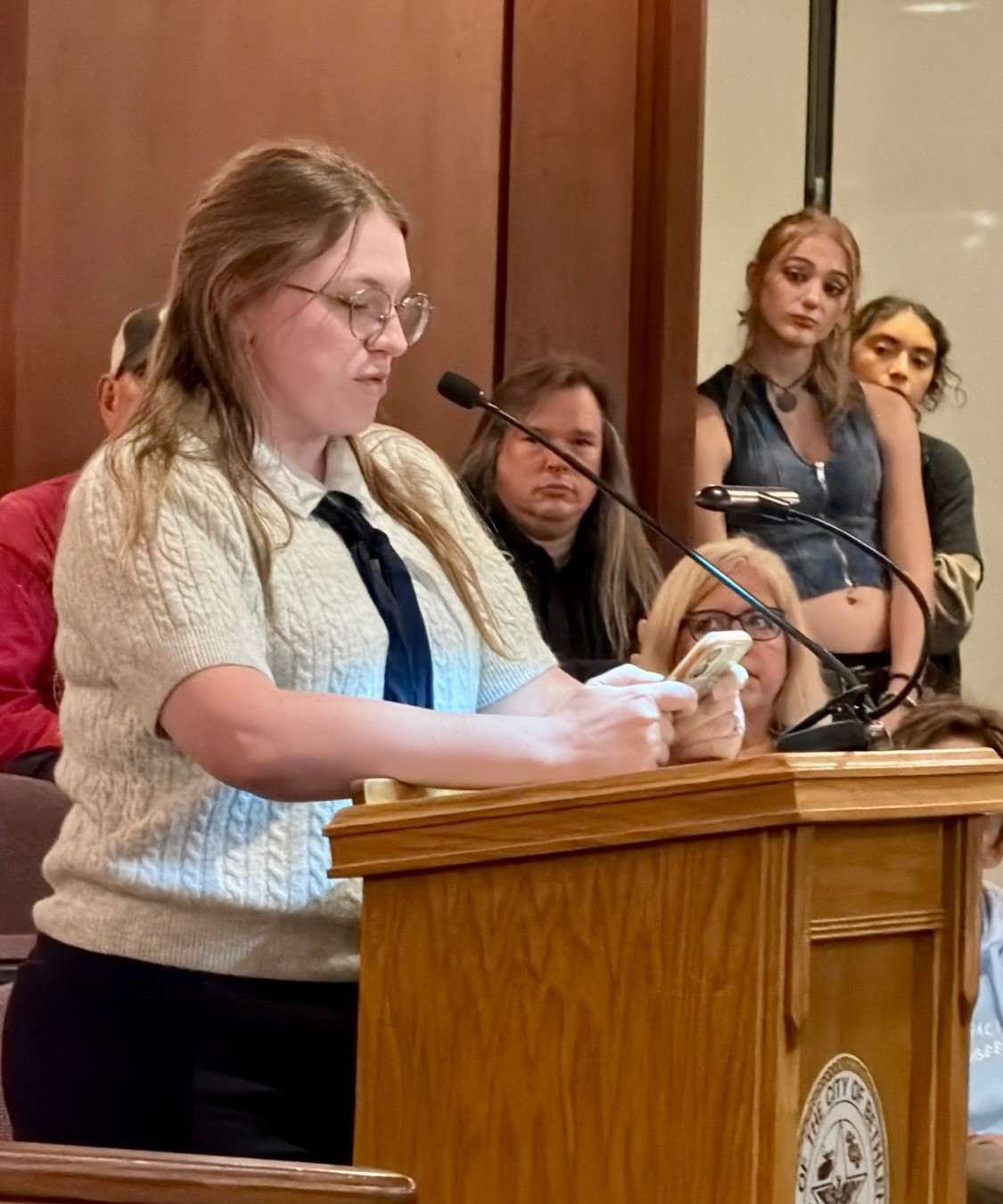
Chuss said a flavorings plant in the same industrial park already sends a strong smell over her neighborhood at least half the days of the month, despite state involvement.
She did not name the plant. Spray-Tek, which spray-dries flavors and food ingredients at 3010 Avenue B, about 1,000 feet north of the Industrial Drive site, has been cited twice by the state Department of Environmental Protection for odors that drew resident complaints, in 2022 and 2024.
Shelby Carr asked for studies by independent experts with no ties to the developer, closed-loop water cooling, developers covering the cost of any new power infrastructure, and a ban on nondisclosure agreements for city officials. Several other speakers also asked for independent studies.
Nancy Workheiser said no end user for the Industrial Drive project has been named publicly. She asked for yearly public reports on power and water use, with penalties.
“A promise without a penalty is just a brochure,” Workheiser said.
Owen Levan Euler urged council to consider a municipal curative amendment if it did not pass the rules. State planning law lets a municipality declare its own zoning invalid and gives it 180 days to fix it, during which landowners cannot file competing changes. Euler said it would work as a moratorium.
Others raised “forever chemicals,” known as PFAS, in data center wastewater, the steady hum heard near operating data centers, and the effect on warehouse workers in the industrial park.
Council’s final vote on the rules is set for Oct. 20. Residents’ next chance to weigh in on the Industrial Drive project itself comes Nov. 12, when it goes before the Planning Commission under the current code.
“This is the start here today. It’s not the end. Please don’t run out of steam,” Kabir Gupta told council.