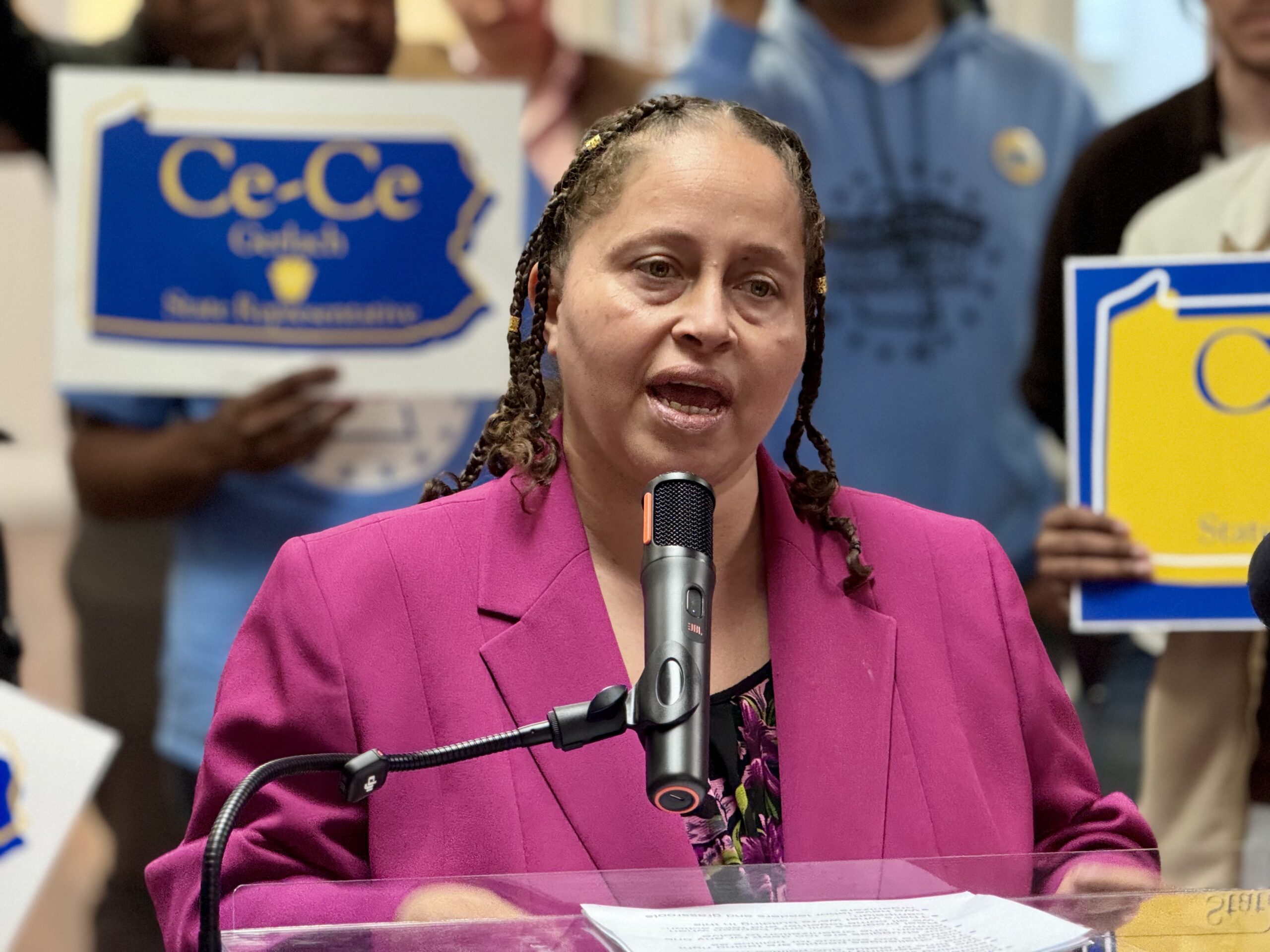
Residents raised concerns about housing costs, homelessness, education, mental health and community investment during a virtual town hall with Ce-Ce Gerlach, candidate in the May 19 Democratic primary for Pennsylvania’s 22nd House District. The meeting, moderated by Yamelisa Jimenez Taveras, was held on May 7.
The goal of the Q&A session was to give community members an opportunity to directly ask questions about Gerlach’s platform, legislative priorities and vision for representation in Harrisburg.
“We want to make sure that we understand her platform, her policy and how she’s looking to represent us in Harrisburg,” Taveras said during the opening remarks. “This is a big race, and we want to make sure we have the right person in that seat.”
Gerlach said her campaign is rooted in accessibility, accountability and direct communication with residents.
“I say what I mean. I mean what I say, and you can always count on me,” Gerlach said.
Gerlach currently serves on the Allentown City Council and previously served for eight years on the school board. On her legislative background, Gerlach highlighted that she has introduced more than 100 bills and resolutions, with over 70 passing.
These policies have included protections from ICE, opportunities for veterans, supporting the unsheltered community and strengthening discrimination protections in Allentown.
Gerlach said her decision to run comes at a time when many residents are struggling financially.
“I’ve decided to run for state representative during a time when people are choosing between gas and groceries,” Gerlach said. “It is during these times that we need experience, someone with a vision and someone with that fight. During these times, it’s the state and the local governments that are the last line of defense. We are the ones that can put in policies to protect people, and to uplift communities. I am the only Democrat running with a clear legislative agenda, and the experience to back it up and actually get it done.”
Gerlach said she is going to Harrisburg because the rent increases are anywhere from $200 to $400 a month. “This has got to stop,” Gerlach said. “We need to keep people in their homes.”
Housing affordability and tenant protections
Much of the town hall focused on housing concerns from residents, including rising rents, application fees and utility charges imposed by landlords and property management companies.
Gerlach said Pennsylvania is a “very landlord-friendly state,” and argued that stronger tenant protections are needed at the state level. Pennsylvania has no statewide rent control or cap on rent increases, though some municipalities, like Philadelphia, have enacted local tenant protections.
One policy Gerlach said she would pursue is rent stabilization, which would allow municipalities to cap how much a landlord can raise a tenant’s rent.
“There are good landlords out there,” Gerlach said. “I know many of them and they want to provide safe, quality, affordable housing for their tenants. We also know there are a lot of mega corporations that are taking advantage of this housing crisis and filling their pockets. The main issue from what I see are these mega landlords.”
Gerlach said she has already begun consulting with attorneys and researching policies from other states to identify possible legislative solutions.
“Any legislation that I introduce will be in conjunction with tenants, landlords, property owners,” Gerlach said. “I am not trying to put an undue burden on a person who owns a couple of properties.”
Resources for the unsheltered community
Questions about unsheltered residents also became a major focus of the discussion.
Gerlach explained the initiatives she supported while serving on the city council, including creating a homelessness commission, establishing a city budget line for the unsheltered community, and funding programs to prevent evictions.
Gerlach said the city now allocates $100,000 annually towards services for the unsheltered community, which she believes is still not enough.
“We definitely don’t have enough shelters, but we do allocate money to the ones that do exist,” Gerlach said. “We should be spending more specifically on housing, which would be inclusive of the unsheltered community.”
She connected homelessness and housing instability to broader concerns about gentrification and rising rents.
“When you’ve got these new luxury apartments coming in, many property owners feel justified now charging that $1,000 for a room,” Gerlach said.
Data centers and local decision-making
Residents also questioned Gerlach about data center development, environmental impacts, and local decision-making.
Gerlach said municipalities should have greater authority to pause and regulate projects while researching their effects on communities and waterways.
“I would support extremely tight regulations on data centers because there are data centers that could be built near distressed waterways,” she said. “We need to allow municipalities to issue moratoriums.”
A moratorium would allow leaders to say that until research is done, they will not allow data centers.
She added that she would consult all communities before making decisions on complex legislation.
“I do not govern alone,” Gerlach said. “I go to the experts: laborers, environmental groups, progressive groups and business leaders.”
Education, nonprofits and youth investment
Gerlach opposes school voucher expansion and supports investments for public schools, after-school programs and nonprofit youth organizations.
“We spend a lot of money on the after effects of not having after-school programs,” she said. “It has always been my belief and my effort to invest in the root causes of crime and poverty, which is access to a quality education, access to quality job training, access to fun and access to recreational opportunities. I 100% support funding for after-school programming.”
She also discussed affordability concerns in higher education, particularly for first-generation college students and dreamers, meaning undocumented students brought to the United States as children.
“I believe dreamers need to be charged in-state tuition, not out-of-state tuition,” she said. “We also need to ensure that we are not continuing to raise the tuition year after year.”
Mental health and support for working families
Residents asked about mental health services, especially for single mothers balancing caregiving responsibilities and financial stress.
Gerlach responded that mental health investments must include culturally aware, flexible services capable of meeting families where they are.
She connected mental health struggles to broader economic pressures that residents face.
“How much of our stress has come from just not knowing if we can pay the bills?” Gerlach asked.
She advocated for policies including wage increases, addressing rising grocery costs and exploring a freeze on Pennsylvania’s gas tax to help reduce financial strain on working families.
“We need to address the issues that lead us to be stressed, depressed or worried,” Gerlach said.
Focusing on working-class advocacy
Gerlach described District 22 as reflective of larger struggles happening across Pennsylvania.
“We’re all working-class people just trying to make it in this world,” she said.
She closed by emphasizing her experience, legislative preparation, transparent communication and commitment to community-driven policymaking.
“This campaign started on the porches of teachers,” Gerlach said. “This campaign started underneath bridges. This campaign started in union halls. This campaign started in lines at soup kitchens. I am ready to go down there right now and get to work for you, and I know what I’m doing. I’m ready to lead.”
The Democratic primary is Tuesday, May 19. Voters can go to vote.pa.gov to check their registration status, find their polling location and request a mail-in ballot.