EASTON, Pa. — When Easton City Council meets on Jan. 13, one of the main topics will be the installation of artificial intelligence cameras that can read license plates.
Flock Safety, the company behind the cameras, says its mission is to eliminate property theft in the United States. However, the cameras also raise privacy concerns.
“I think the whole premise is safety and security and apprehending criminals,” Councilwoman Crystal Rose said, “but you have to balance that with personal data and privacy.”
Rose pushed to table a resolution approving the cameras at the recent committee meeting on Dec. 10, citing a lack of knowledge of the city’s data policy regarding camera images. City solicitors Joel Scheer and Jeremy F. Clark are currently working to provide more information to the council.
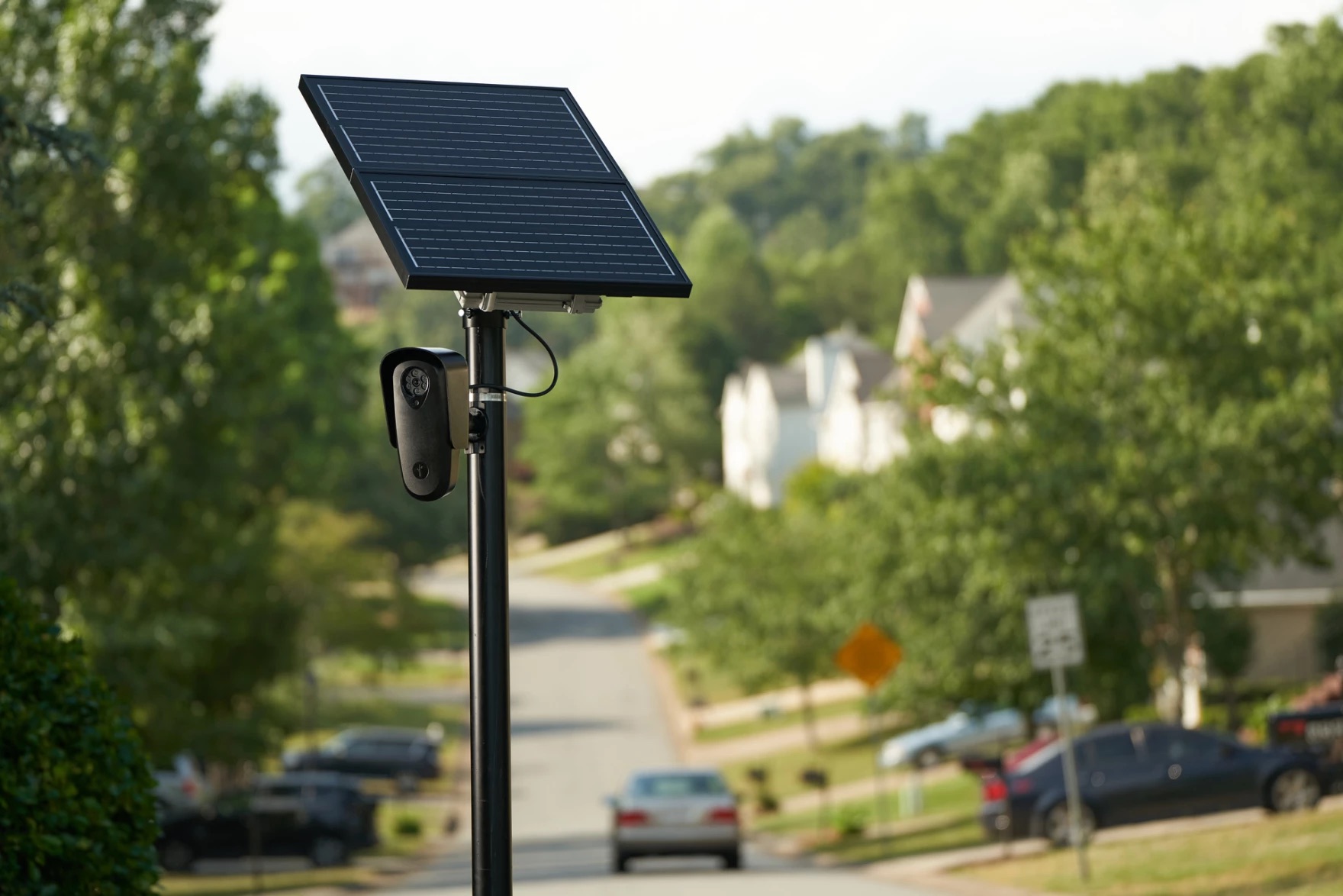
Flock’s automatic license plate reader (ALPR) cameras take images of passing cars, serving as potential “third-party witnesses,” according to the U.S. Department of Homeland Security, for crimes on city roads. Flock’s Falcon and Sparrow camera models can identify multiple details from the rear of passing cars, including model, color and features like bumper stickers and dents. Flock’s software then attempts to match these attributes, or what the company calls the “Vehicle Fingerprint,” with license plate information related to stolen cars, Amber Alerts and other “hot list” alerts identified by law enforcement.
In January 2024, Allentown announced it would install 67 of Flock’s cameras after receiving $4.1 million in grants from the Pennsylvania Commission on Crime and Delinquency. Flock leases its cameras for $2,500 to $3,000, making it more convenient for agencies and businesses to gain immediate access.
In a press conference, Police Chief Charles Roca said the Allentown Police Department was “committed to working with our community and leveraging the best technologies available to address violent crime and improve public safety in the city.”
The company now assists more than 5,000 law enforcement agencies across the United States. Flock’s cameras helped police locate the suspect in a shooting of two students at Brown University, after a prompt to Flock’s software matched a recent camera image.
Proponents such as Roca and investors in Flock Safety, which was valued at $7.5 billion after a major funding round in March, cite cases like these as evidence of Flock’s ability to “protect lives, promote impartial law enforcement and most importantly, solve crime and save lives.”
However, cities across the country have chosen to discontinue partnerships with Flock only months after installing its cameras, citing privacy concerns.
According to Rose, technological advancements need safeguards before adoption.
“Technology can be great, but adopting the technology without safeguards in place, I think that’s what becomes dangerous,” she said. “Residents have the right to privacy and having their information and data protected.”
Organizations such as the American Civil Liberties Union argue that ALPR cameras violate Americans’ Fourth Amendment rights to privacy and allow businesses and law enforcement to build extensive records of citizens’ information.
“There’s no reason the technology should be used to create comprehensive records of everybody’s comings and goings — and that is precisely what ALPR databases like Flock’s are doing,” organizers from the ACLU wrote. “In our country, the government should not be tracking us unless it has individualized suspicion that we’re engaged in wrongdoing.”
Rose echoed these concerns.
“How long are we holding on to this information?” she asked. “The information that we don’t need, how is it disposed of? What is Flock doing with our data? Are they making money off of this?”
Flock’s evidence policy states that images are deleted after 30 days, a standard in line with other ALPR systems. However, the company also notes that the retention period depends on “the individual customer’s agreement.”
DeFlock, an open-source map of reported ALPR locations, shows that more than 80 such cameras are currently installed on poles across Allentown and Bethlehem, most of them operated by Flock. The cameras are primarily along major city roads and highways, with others in parking lots of companies such as Lowe’s, a major Flock partner. Some roads have multiple cameras within short distances of each other, including Airport Road and Tilghman Street, which each have at least five.
Flock subscribers can also share their data with other subscribers, creating a network that can span across city and state lines, giving agencies quick access to information on citizens’ daily activities.
“Everything is how it’s used,” Rose said. “The same technology can be used by good people with the right intentions and could also be used by people who want to hurt other people or look for financial gain.”
Garrett Langley, the CEO of Flock Safety, said it is the responsibility of law enforcement and businesses to manage data responsibly.
“We have to give law enforcement tools to do their job, and we should also hold them accountable to not break the law,” he said. “My whole philosophy as the CEO of Flock is: No one elected me president, no one elected me to be police chief of America.”
Rose urged residents to attend the meeting on Jan. 13.
“I would suggest everyone tuning into the next committee meeting on the 13th,” she said. “I think we’ll have a good discussion about it.” She added that she hopes the council will have more information on Flock from Scheer and Clark than the “two-page contract” they received at the last meeting.
“I had a lot of questions, no one seemed to have the answers,” she said. “If we don’t have all the information we need on the 13th, then we’ll table it again until we have the information or all the policies and procedures are in place.”