
LEHIGH COUNTY, Pa. — Lehigh County is considering five new “smart” ballot drop boxes that would expand 24-hour ballot access and create detailed electronic audit records, as officials weigh a compressed rollout timeline and a congressional write-in candidate raises questions about radio-frequency interference.
Bill 2026-42 would amend the county capital plan to allow the Department of Voter Registration to purchase five Sentinel Secure Smart DropBoxes from Runbeck Election Services.
The county’s capital plan lists a $104,125 cost in 2026 and $157,990 over five years for the five Runbeck units, including service fees, maintenance, and support. The full project amount is listed as funded through grants or other revenue.
The commissioners’ action would add the purchase to the capital plan, but it would not put the boxes into use. The Board of Elections is scheduled to decide Sept. 16 whether to move forward with deploying the new boxes. Commissioners would then consider final capital authorization Sept. 23. County election staff said Oct. 9 is the earliest projected delivery date, but no date has been set for the boxes to begin accepting ballots.
The proposed boxes differ substantially from the county’s existing drop boxes. Election staff said they could operate outdoors around the clock and include built-in cameras and batteries. The system can associate a photograph of the person making a deposit with a barcode scan and images of the ballot envelope, creating an electronic audit record.
Commissioner Ron Beitler said that record could improve chain-of-custody and accountability but questioned whether there is enough time to deploy the new technology before the November election. Other commissioners also raised concerns about the compressed timetable for delivery, testing, training and deployment.
The monitoring issue has surfaced before in Lehigh County. A 2022 court opinion recounting an investigation by then-District Attorney Jim Martin said detectives identified at least 288 instances during the 2021 general election in which a voter appeared to deposit more than one ballot. The vast majority involved two ballots, likely including one for a spouse or household member, the court said. Martin reported finding no evidence of widespread ballot stuffing and declined to prosecute the cases.
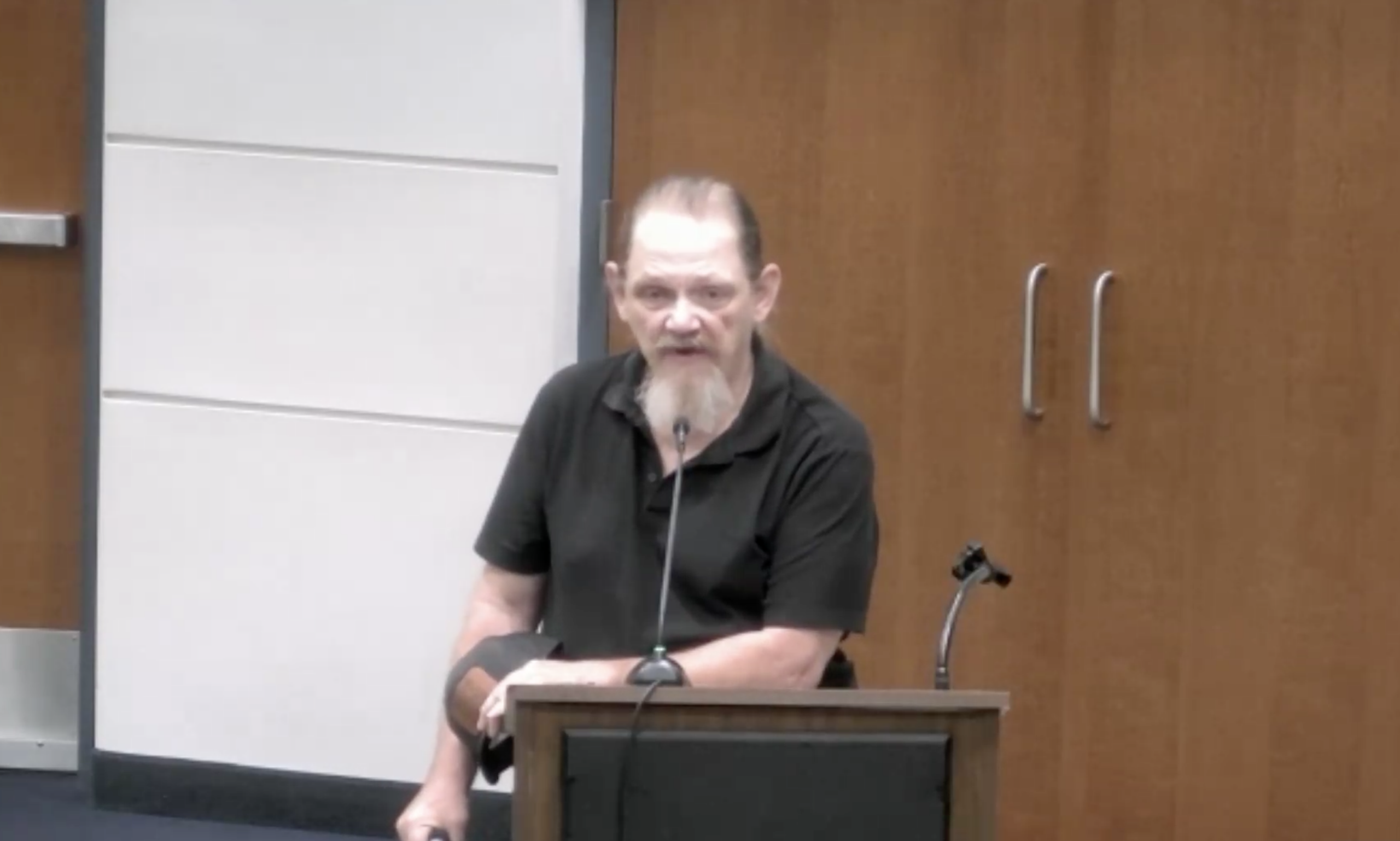
Against that backdrop, independent PA-07 write-in candidate Lewis Shupe raised a separate technology question during public comment: whether RF interference could affect the Sentinel boxes and whether Federal Communications Commission Part 15 rules apply.
Shupe acknowledged he had not examined a Sentinel unit and otherwise expressed support for expanded ballot access.
Shupe has raised similar concerns before. Northampton County Council minutes from Feb. 6, 2020 record his comments during debate over electronic election equipment.
In a demonstration described on his website, Shupe says he injected a 133 MHz signal into an older Dell laptop and observed the computer become temporarily unresponsive until he removed the signal. The demonstration was not performed on a Sentinel unit or voting machine and does not establish that the proposed drop boxes would respond the same way.
Runbeck says Sentinel includes a front-facing camera, barcode scanner, and administrator dashboard for accessing and transferring data. A Cook County, Illinois, contract with Runbeck says Sentinel can transfer envelope images through Wi-Fi or cellular connectivity, or by USB. The contract shows Sentinel supports Wi-Fi and cellular connectivity; Lehigh County has not publicly specified whether its units would use those features.
FCC Part 15 governs many devices that intentionally or unintentionally generate radio-frequency energy. Its rules generally require covered devices not to cause harmful interference and to accept interference they receive. A separate FCC provision advises equipment designers to account for nearby high-powered radio sources to reduce susceptibility to harmful interference.
In practical terms, interference or jamming could disrupt a wireless connection. For a connected Sentinel unit, that could potentially interrupt communication with a central dashboard or affect the availability or transmission of envelope images, barcode information, or audit records.
None of that establishes that Sentinel has such a vulnerability. Publicly available information reviewed for this story does not show that RF interference can alter ballot records, change barcode data, or affect deposited paper ballots. It also does not clearly explain how Sentinel behaves during RF interference or a network outage, what data it retains locally for later synchronization, or what electromagnetic-immunity testing the product has undergone.
Current federal standards require voting systems certified under the Election Assistance Commission’s VVSG 2.0 to be incapable of using a wireless network. The EAC says wireless capabilities may be physically removed or digitally prevented from operating. Those standards provide context for federal security requirements for wireless voting-system technology, but they do not, by themselves, establish requirements for Sentinel, which is a ballot-drop device rather than necessarily an EAC-certified voting system.
Shupe also suggested exploring whether sheriff’s deputies or other authorized people could assist voters who cannot physically return ballots, while urging county officials to seek legal guidance.
Shupe raised a separate proposal earlier in the meeting involving Hamilton Street Dam, suggesting Lehigh County and Allentown explore hydroelectric generation there as a possible source of public revenue.
The idea has been explored before.
Allentown sought to develop hydropower at Hamilton Street Dam decades ago, but the project was never built. Interest resurfaced more recently in 2019, when New England Hydropower Company applied to the Federal Energy Regulatory Commission for a preliminary permit to study a project using the existing Hamilton Street Dam and Lehigh Canal.
The proposal called for a 485-kilowatt generator with estimated annual production of 3,560 megawatt-hours. The preliminary permit process was for a feasibility study and priority for a later license application; it did not authorize construction. The proposal appears in the Federal Register.
Whether a hydroelectric project at the site would be economically viable under current conditions remains unclear.