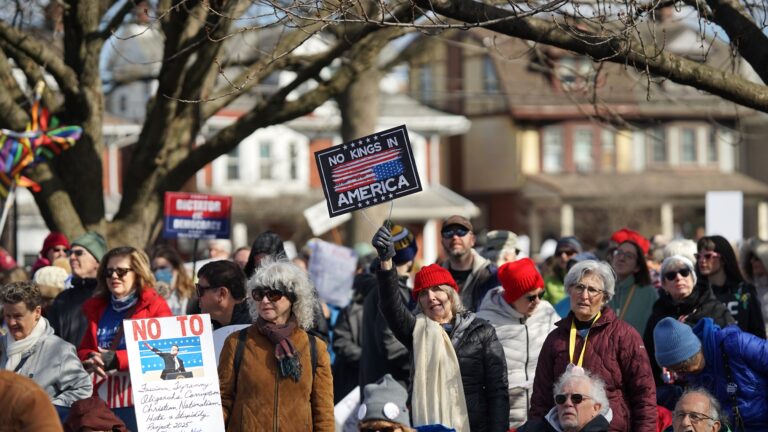

BETHLEHEM, Pa. — Dozens of Lehigh Valley residents staged a die-in Monday, July 7, on the SouthSide of Bethlehem, Pa, to protest federal budget cuts.
The protest was held in response to the passage of the Fiscal Responsibility Act of 2025, a federal law that reduces funding for programs such as Medicaid, Medicare, SNAP, and the Affordable Care Act as part of a broader deal to limit government spending and extend the debt ceiling.
Organizers and local officials used the event to highlight how the law’s impact is taking shape in local communities.
The demonstration, led by Indivisible Lehigh Valley Bethlehem’s Medicaid Working Group, featured protesters lying motionless on the ground to symbolize the tens of thousands of lives they said could be lost due to the law.


The idea for the event came together quickly during a group chat among organizers, according to Annie Kisilewicz, a lead organizer with ILVB.
“We have to respond somehow,” Kisilewicz said. “We have to tell Ryan Mackenzie one last time that we need him to vote no to this bill, because it contains draconian cuts, all in the name of giving billionaires more tax breaks.”
Kisilewicz said the protest drew on past activist traditions, such as those used by ACT UP in the 1980s, and was designed to be both symbolic and emotionally resonant.
“I saw people crying. I was crying,” she said. “It was such a strong message — not just to Mackenzie, but to the passersby who might not know that Medicaid has been cut back so badly.”
The idea for the die-in originated from conversations among ILVB’s Medicaid committee about the immediate impact the new law will have on healthcare access in the Lehigh Valley and beyond.
“This law will incur the largest cut to Medicaid we’ve seen in our country’s history,” Kisilewicz said. “Estimates show it’s going to result in the deaths of 51,000 people each year from preventable causes — and all so we can hand out tax cuts to billionaires.”
Organizers asked attendees to wear black and plan to install symbolic headstones around the Rose Garden in Bethlehem at a follow-up rally on July 17.
Lehigh County Controller Mark Pinsley said the cuts will have “devastating” effects on local budgets and families.

“Lehigh County spends $103 million on mental and intellectual disabilities. All of it comes from Medicaid,” he said. “We spend about $100 million on nursing homes, and $67 million of that is Medicaid. When we lose that funding, it doesn’t come back.”
Pinsley, who has a brother with disabilities who relies on Medicaid, said his family already sees the strain.
“We used to fill out eligibility forms once a year. Now we have to do it twice a year, and we have to submit monthly work requirement paperwork. It’s gone from one form to 14. There’s no one on the other side even reviewing it — they cut that too.”
He warned that tens of thousands of Lehigh Valley residents will face these hurdles, and many won’t be able to navigate them without help.
Pinsley emphasized that while the protest was directed at federal lawmakers, local officials and residents also have a role to play.
“We need to decide if we’re still a community,” he said. “Because when people lose their health care, are you going to say, ‘Goodbye and good luck’? Or are you going to help them?”
He added that while showing up at a congressional office might not sway a federal lawmaker, civic engagement at the local level can still drive change.
“You show up at Ryan Mackenzie’s office — he doesn’t give a flying f—,” Pinsley said. “But show up to a county commissioners meeting with 100 people, and they’ll listen.”
As protests continue, Kisilewicz said she hopes the imagery of the die-in stays with people long after the event.
“Each one of these people here represents one of the 51,000 preventable deaths that are going to happen each year in this country because of the effects of this bill,” she said. “Period.”