Iconic Dixie Cup lowered from Wilson Borough’s century-old factory [PHOTOS]

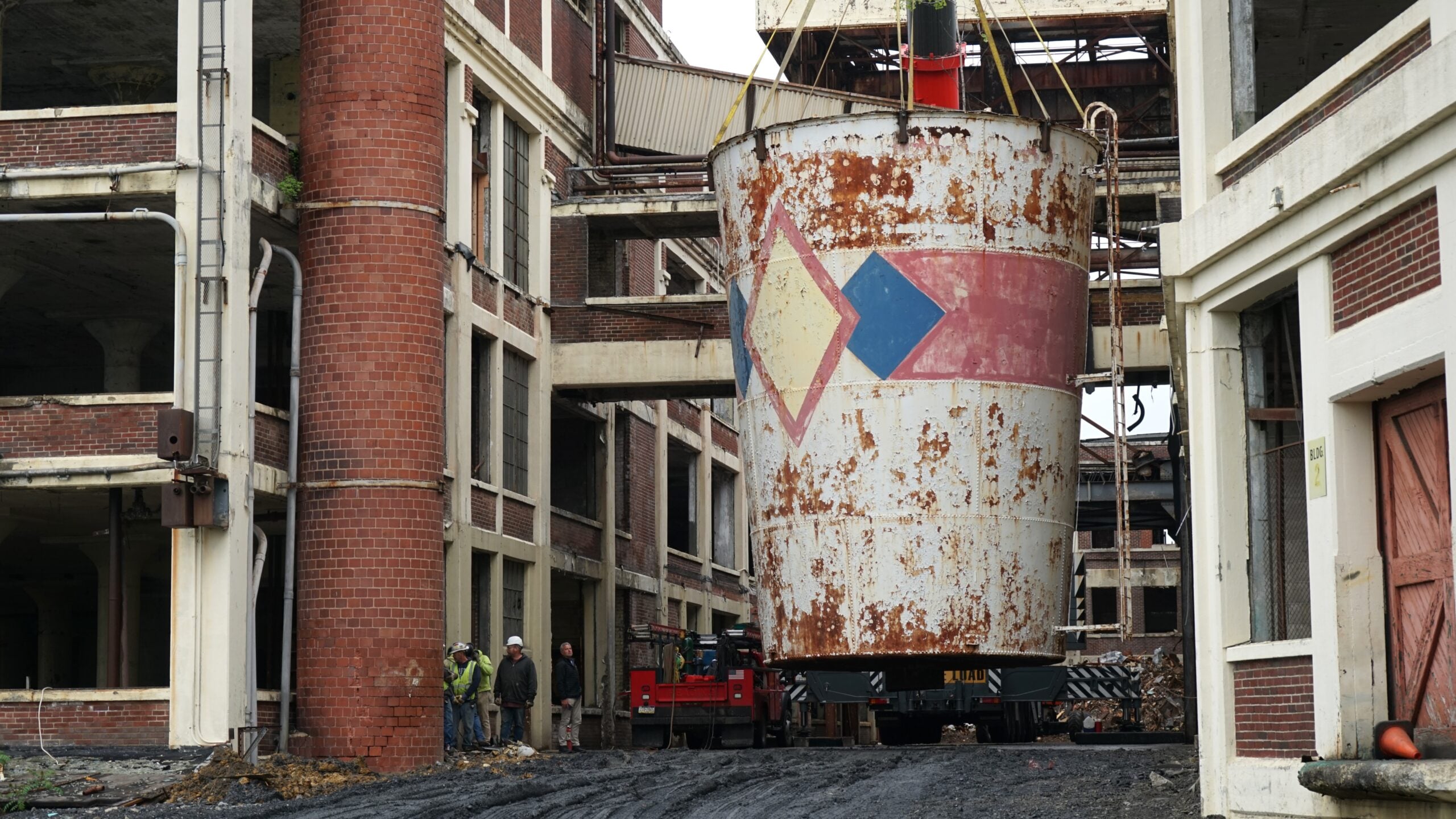
The 50,000-gallon Dixie Cup that has greeted Lehigh Valley travelers from a factory rooftop off Route 22 for decades was lowered to the ground Thursday morning, clearing the way for a $320 million redevelopment that will turn the long-shuttered industrial site into 412 apartments, a movie theater, indoor golf and pickleball, and a community gathering space, according to materials distributed by developer Skyline Investment Group.
The cup itself is not being scrapped. Skyline says it will be refurbished and installed in a new public space on a neighboring property — the developer is calling Dixie Cup Park — the site of the current LA Fitness on 25th Street, which Skyline also acquired and is in the process of demolishing. A fiberglass replica will take its place atop the factory.
The cup was on the ground by 9:05 a.m., resting on a flatbed trailer between buildings at 12 S. 24th St.
Crews spent the late morning welding additional supports to the trailer in response to concerns that the structure could tip, and discussing how to move it past power lines along the planned route.
The ground was wet and muddy from recent rain, and the trailer appeared to drag when the truck attempted to move it forward a short distance before stopping.
Wilson Borough Mayor Donald R. Barrett Jr., on site as the cup was weighed, told the group gathered there that the structure weighed 35,000 pounds and said he had spent eight years waiting for the moment. He described the lowering as the first thing he had wanted to accomplish as mayor.
In prepared remarks delivered later, Barrett described the day as an emotional one and rooted his own connection to the cup in a childhood memory of returning to the borough — “driving back late at night after a long trip with my parents and seeing that cup in the distance,” he said, “knowing we were almost home.”
The cup, he said, has been “a symbol of home, of memories, and of Wilson Borough itself.”
He said the original is being taken down for safety reasons and to allow restoration, and will be preserved and displayed; a “safer replica” will take its place on the rooftop.
Barrett tied the lowering to a sequence of recent regulatory milestones for the property.
The factory was officially listed on the National Register of Historic Places on February 20, 2026, he said, and the project has since received approval of its remediation cleanup plan and Pennsylvania Department of Environmental Protection approval under the state’s Act 2 land-recycling program — the framework that allows contaminated industrial sites to be cleaned up to standards specific to their planned reuse.
He said the borough and the Wilson Area School District had worked “side by side” on the project and had hired a consultant to help ensure it was carried out responsibly.
“This isn’t just about removing a cup,” he said. “It’s about restoring a legacy, rebuilding pride, and bringing our borough back to its glory.”
Regina Curran, a longtime borough resident whose grandmother worked at the plant before Curran was born, said she was glad the cup itself was being preserved but was critical of the redevelopment around it.
“It’s been a landmark — yes, for probably, I bet you, over a hundred years,” Curran said.
“They’re not doing anything for us — for regular people,” she added, calling the apartments “expensive” and the building, in its current condition, an “eyesore” that has sat unused for “50, 60 years.”
The factory, opened in 1921 by Dixie Cup founder Hugh Moore after the company outgrew its New York City operations, produced single-use paper cups until it closed in 1983. It has sat vacant ever since.
Skyline has said historic elements of the structure will be preserved and restored as part of the project.
Skyline, led by managing partner Brian Bartee, has rebranded the project “1921 Dixie Avenue” and is folding it into a larger mixed-use vision called the New Life District.
According to Skyline’s release, plans call for 412 apartments across the property, along with a movie theater, indoor golf and pickleball facilities, podcast studio space, and a community gathering area that will eventually display the original Dixie Cup as its centerpiece.
Skyline says the first phase will create more than 200 permanent jobs and 320 construction jobs, with completion targeted for 2027.
Speaking to people nearby on site, Bartee described a construction timeline of roughly 16 months for the main building, with leasing expected to begin about eight months after construction starts, and the overall property build-out running approximately 20 months.
In Skyline’s press release, Bartee said: “This isn’t just about salvaging an old factory — it’s about embracing sustainability while honoring the building’s architectural legacy. This is a new chapter for a building that our entire community has held close for over 100 years.”
Leonard Feinberg, chairman of the Wilson Borough Planning Commission, said the lowering marked “a day in history.”
He said some residents over the years had pushed for a full teardown, but described demolition as impractical given the building’s construction — concrete columns roughly six to seven feet wide, spaced every 20 feet.
Feinberg said the project will be built in phases and that environmental remediation is now substantially complete.
That work has been led by Brian Sargent of Sargent Enterprises, who has been involved with the building on and off for 23 years and has spent nearly four decades in environmental remediation.
Sargent told visitors during a tour Thursday that the factory had at one point been classified as a brownfield site contaminated with PCB-laden soils and asbestos throughout — in pipe insulation, flooring, and small adhesive points on the ceilings that once held tiles in place.
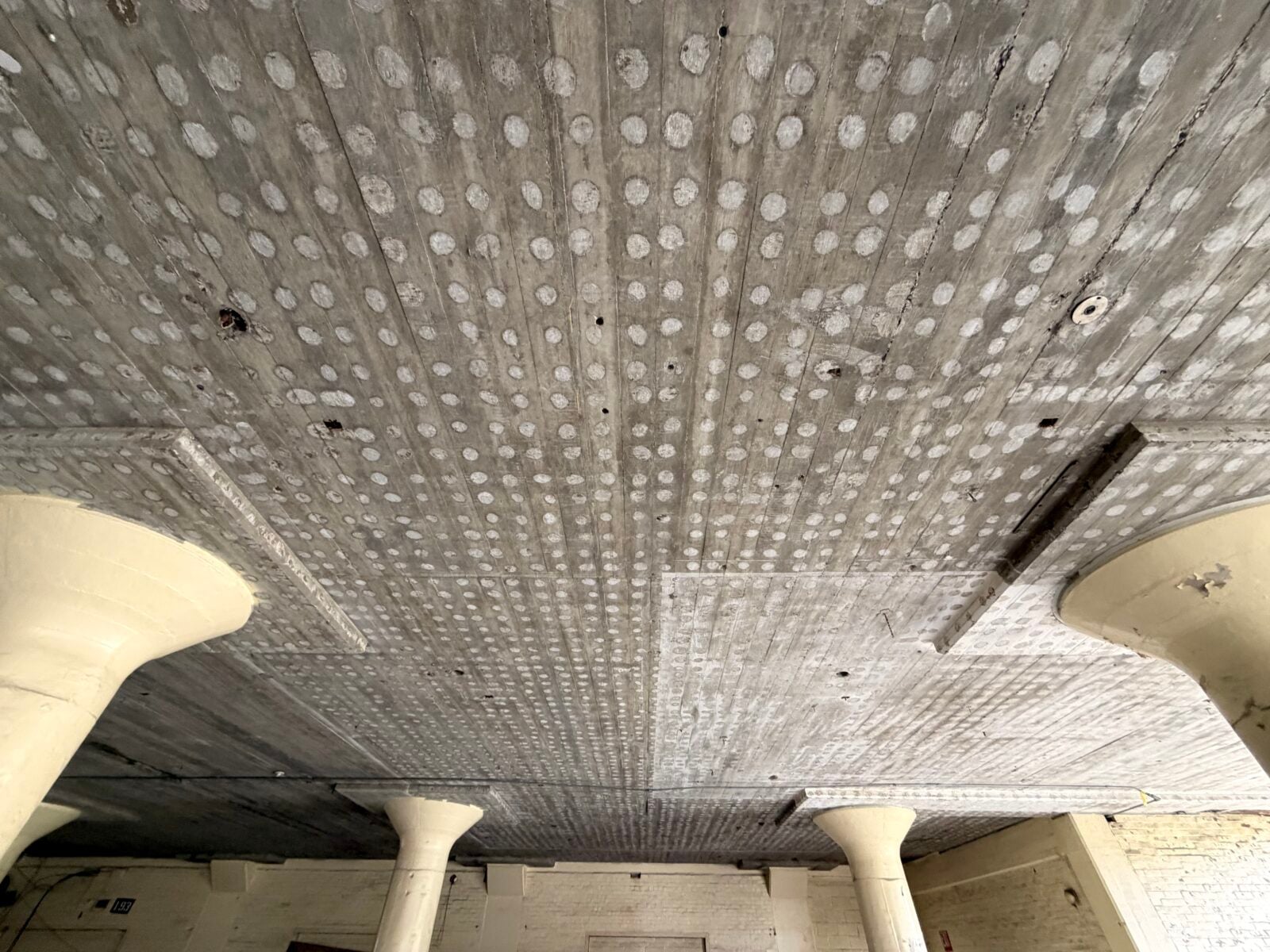
Each of those points, he said, had to be chipped off by hand rather than with heavy machinery in order to preserve the original concrete ceilings, which he said was part of the historical-preservation work on the building.
The U.S. Environmental Protection Agency has notified the owners that required remediation work is complete, Sargent said, and Bartee said Skyline is submitting paperwork to the Pennsylvania Department of Environmental Protection this week seeking a formal “no further action” determination — the regulatory step that would lift the brownfield designation.
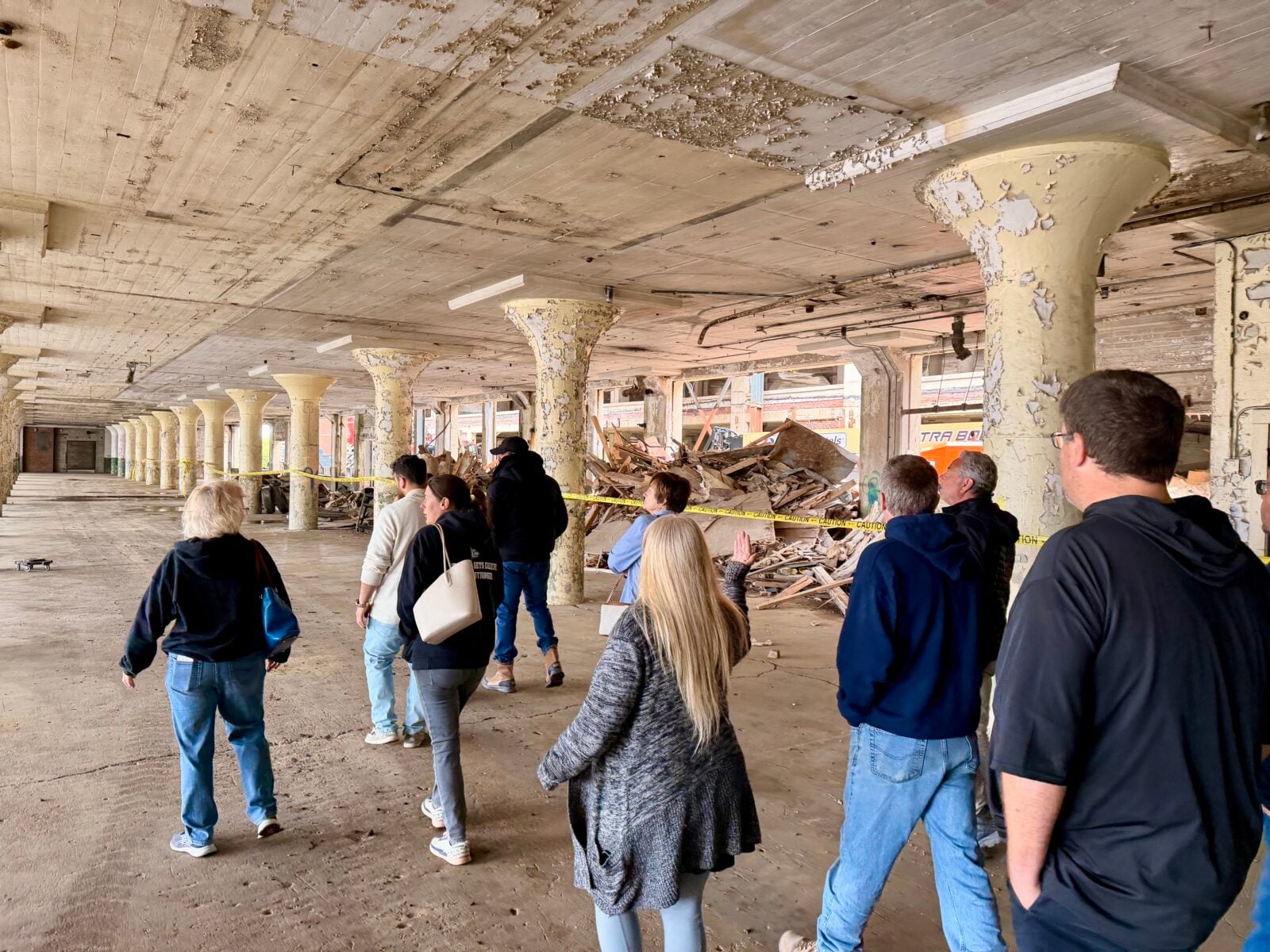
DEP has up to 90 days to issue the letter, which Bartee said the agency has already indicated will be approved.
“It’s something that the borough should be really proud of,” Sargent said of the cleanup, calling that level of remediation “very, very rare” on a privately developed site of this size.
Other parts of the property are also in transition.
The LA Fitness building on 25th Street is coming down, and a smaller building on the factory property — once the heating or steam plant — was originally planned to reopen as a luncheonette or coffee shop serving the adjacent bike path, according to Feinberg.
By Thursday afternoon, crews had finished bracing the cup with wooden beams and pieces, completing the day’s work.
The factory’s transformation is targeted for completion in 2027.