When Kelli Tremba, Staff Development Facilitator at Carbon Lehigh Intermediate Unit, reached out to me in September 2025 about a local journalism summit, I was genuinely excited.
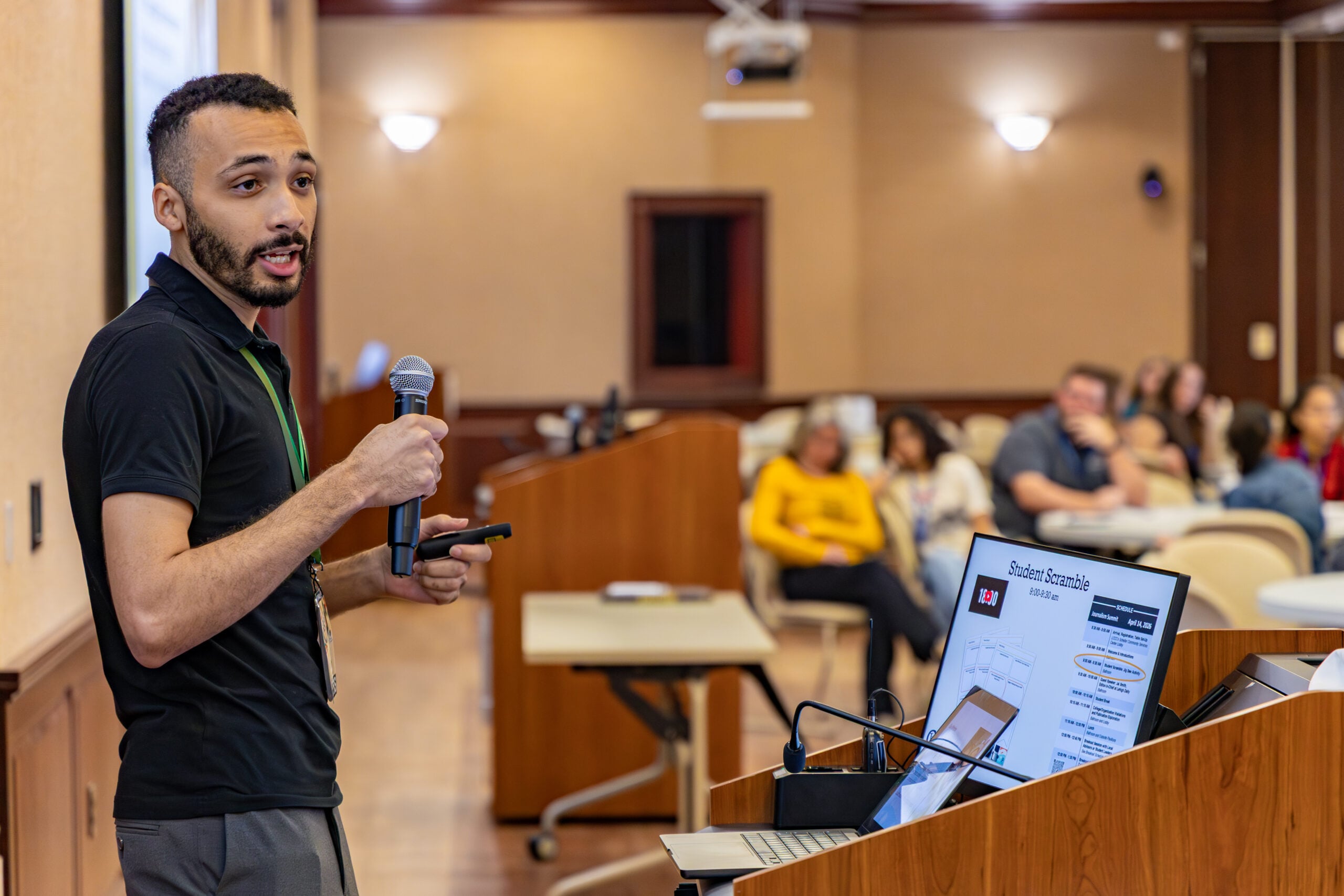
The fourth annual event would bring together 120 student journalists from nine school districts across the Lehigh Valley — and she wanted me as the keynote speaker.
For two years, since founding Lehigh Daily in June 2024, I’d been doing this work, but every industry event I’d attended had been in Philly or out of state, in those Lenfest and Knight rooms. Good rooms. But being invited to speak in the Lehigh Valley? That felt different. I accepted immediately and gratefully.
Then, predictably, I forgot all about it.
A month out from the event, Kelli pinged me to make sure I was still in. I was. And when we talked about what she was hoping for, she said something that stuck with me: past summits had been great, but they’d been heavy.
She wanted this one to land differently for the students. She wanted optimism.
In past years, the summit had leaned on reporters from outlets like The Morning Call, Blue Ridge News, and D11Sports.com. This year, Kelli wanted something different: college media advisors, their student staff, and working examples of what journalism can look like at the next level.
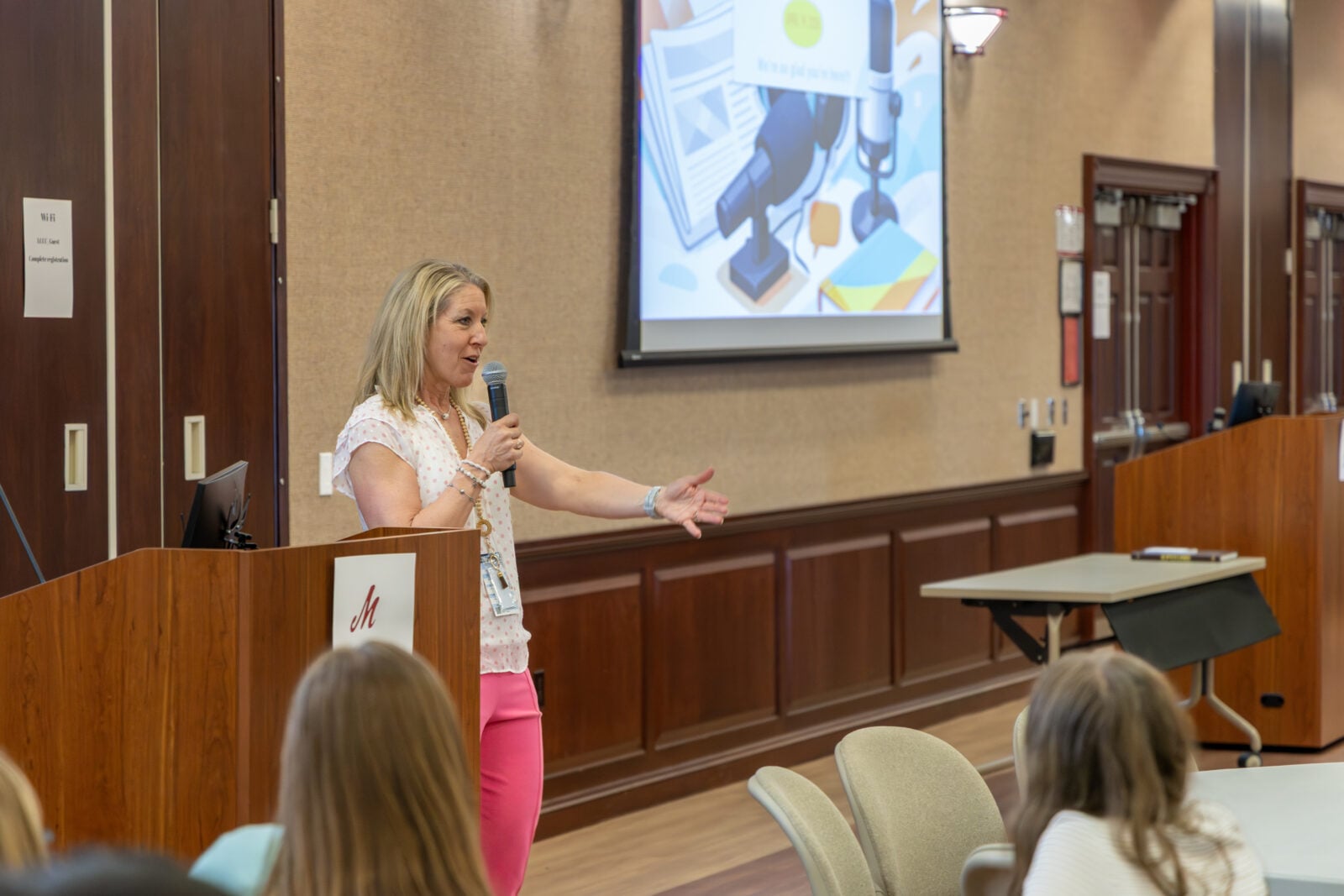
A professor at Muhlenberg had told her to reach out to me. As Kelli put it in her original invite: “You have built a thriving news website and social media presence, which (I know) our students would find very exciting!!”
That detail stuck with me. A professor at Muhlenberg recommended me to Kelli, and apparently, she’d been pointing students toward Lehigh Daily, too.
Her name is escaping me at the moment (I know I have it in an email somewhere), but it was a nice reminder that the work reaches further than you realize. That quiet kind of support, the kind that happens in rooms you’re not in. To whoever you are: thank you.
Cardi B and the Case for Modern Local News
The first slide was just a welcome card:
“Welcome, students — we need you, journalism needs you. Let’s lock in.”
From there, I opened with a screenshot from our Instagram — a 36-second clip of Cardi B walking into Spin Me Round at Palmer Park Mall in September. I’d waited outside that mall for ten hours to capture it. Eight in one stretch, a dinner break, then back at it. That clip reached about a million views across our social channels.

My next slide showed how the same story performed on WFMZ and The Morning Call. Ours dusted them. I’m making that claim based on what I saw, not an audited report, and the gap wasn’t even close.
The point of leading with Cardi wasn’t to flex. It was the setup for the real argument. One person with a small team and no million-dollar budget can out-distribute legacy outlets on a story the entire Valley was paying attention to.
That’s not a Lehigh Daily flex so much as a reality check on where modern media actually lives now. The big guys are still figuring out how to reach people. That gap is where we’re working.
I also told them about House Bill 2047 and 2048 in Pennsylvania, which I’m currently supporting alongside Free Press to help establish a funding pathway for publications like ours. Look them up. They matter.
But Cardi B Doesn’t Build a Community
I was careful to follow that slide with the counterweight. Cardi B is fun. We do a lot like that. But celebrity drop-ins don’t shape a community the way coverage of a “No Kings” protest in Bethlehem does, or a city hall meeting, or a zoning fight nobody wants to read about.
Lehigh Daily’s goal is to better our community by being a free resource — no paywall, full stop. The Morning Call can put up all the walls it wants; I understand the business reason. But when a story about an election or a local policy change is locked behind a “$1 for a year” paywall, a chunk of the community that most needs that information can’t access it.
We will never do that. If you ever see a paywall on LehighDaily.com, come find me, because something has gone very wrong.
An informed community is an empowered community. That’s the whole idea.
This Isn’t Your Grandparents’ Newsroom

I asked the students two questions. How many of you have read a physical newspaper in your lifetime? How many of you have used TikTok or another social platform to get news?
More hands went up for the newspaper question than I expected. That actually caught me off guard in a good way. Keep that up, kids.
But the wider trend is real. Per a 2025 Pew Research study, 43% of U.S. adults under 30 regularly get news from TikTok, up from 9% in 2020.
The newspaper monopoly on advertising—the one that funded local journalism for most of the 20th century—broke first with cable news in the ’80s, then cracked wide open with the rise of digital platforms and social media, and has basically shattered in the era of short-form video and targeted online ads.
The U.S. has lost more than 3,300 newspapers and over 270,000 newsroom jobs since 2005, per the Medill School of Journalism. National outlets are doing okay — if you’ve got Trump to cover every day, the traffic takes care of itself. Local is a different fight. Different model, different content, different math.
But we’re not without hope. That’s where I wanted to land for these students. Because the room was full. Because they showed up.

Why I Started Lehigh Daily
I’m a developer by trade, not a journalist. I built Lehigh Daily the way a dev would: a fast site, a clean design, accessibility, and distribution-first. The catalyst was embarrassingly simple: I had a daughter, and I realized I couldn’t tell you who the mayor of Bethlehem was. Or any Lehigh Valley city, really. About two years ago, that wake-up call pushed me to make a change.
A passion project turned into a responsibility. I can’t let go now. I’m in.
Our mission, in plain terms:
- Digital-first, modern distribution. TikTok, Instagram, Facebook—not as an afterthought, as the front door.
- A younger, more diverse newsroom. Most of the staff pages at legacy Valley outlets skew overwhelmingly white. That isn’t representative of the community the news is supposed to serve or the community consuming it. That matters to me.
- Uplift unheard voices. Stories other outlets skip, or simply can’t get to, or don’t have the relationships to surface.
- No paywall. Ever. Already said it. Saying it again.
Two years in, we’re at roughly 30 million video views, six figures in followers across Instagram, Facebook, and TikTok, and — since January — about $150 a month in recurring community support. Small numbers in the national picture. Meaningful ones to me.
That last one, especially: the community putting actual dollars behind our work for the first time, tells me the “local community supports local news” model isn’t dead. You just have to earn it.
Q&A: The Part I Wasn’t Expecting
I gave my talk, braced for the usual tumbleweeds — the room of teenagers who’d rather not be called on — and instead got a flood of hands. Once one student went, it opened up. These kids asked sharp questions.
A few of the ones I got:
On growing social media from zero: The platforms reward consistency before they reward you with a following. Post blindly for three to six months, head down, don’t obsess over the metrics. The algorithms will give you a small boost early to see if you’re worth amplifying; your job is just to keep showing up.
For Facebook specifically, I’ll admit a shortcut: I spent a couple of hundred dollars on ads early on to seed the first thousand followers. Once the algorithm knows what you’re about, organic starts to pick up. News is a slower grower than entertainment, but it grows.
On the biggest obstacle to starting Lehigh Daily: Two things. First, not being a journalist — learning AP style, learning the ethics, catching myself up on what the standards even are. Second, and this is the ongoing one: capital. Being able to pay the people who do this work a living wage. That’s your neighbors and your friends telling your community’s stories. They need to be paid. Figuring out how to get there is the hardest part of this whole thing.
When approaching sources, I get anxious. Honestly, I just forced myself into it the way you jump into a cold pool. Either I went home without the story, or I did the uncomfortable thing. After enough reps, the water loses its chill. Now I’m the guy going, “I’ve got 30 seconds, I need you to talk to me.” It becomes a muscle. Practice on family and friends. Build rapport. Know your source.
On whether Lehigh Daily is my full-time job: I have a 9-to-5. I’m technically on the clock right now — don’t tell anyone. Lehigh Daily is the 5-to-9. Double-dipping until I can make it the whole thing.
On where story ideas come from: A lot flows inbound at this point — two or three tips in my inbox most mornings. Outside of that, it’s time on Facebook. Facebook is where the older community in the Valley talks to itself, and many real stories bubble there before anyone picks them up. That’s a goal of mine — catching things at that stage.
Walking the Floor

After the keynote, I wandered the exhibit area, where participating schools had set up tables showcasing their current work. And look — the quality was real. Some programs still print. Some run print and digital.
A couple have gone all-in on video — weekly shows, podcasts, the works.
I got pulled onto a quick shotgun podcast by two students from William Allen—sharp, funny, great energy—and I’m kicking myself because I didn’t record their names to credit them. Wherever you are, ladies: keep going.

One thing that stayed with me, though, and I want to name it honestly. The gap between programs was visible. Parkland’s video product and photography were excellent, and Parkland sits in one of the wealthier communities in our region, with a deep local tax base.
William Allen, on the other hand, serves a student body where roughly three-quarters of families qualify as economically disadvantaged. The students at both are equally sharp. The difference isn’t talent.
The difference is what ends up in the program — cameras, software, travel, staff time, mentorship — once the core educational needs are covered.
That’s not a new observation, but standing in the room looking at tables next to each other makes it land harder than reading about it in a report. It’s something I want to help close. I don’t know exactly how yet. But I’m writing it down here to be accountable.
Lunch With Middle Schoolers
At lunch, I sat with a table of middle school boys from Whitehall. I’d assumed this was a high-school-only event, and here were these kids, curious as anyone. I asked what stood out to them. The thing they’d locked onto was that I’d interviewed Brandon Graham — they wanted to know how I’d gotten access like that.
I told them that’s the name of the game. Access isn’t given. You ask. You show up. You earn a little, then you ask for a little more.
Then I tested them. Did they know Saquon Barkley? Coplay kid, Whitehall High grad, Eagles running back? The table hit me with a unanimous “of course” — borderline offended, I’d even asked. When I mentioned we’ve covered Saquon in the Valley, too, they gawked.
Hometown kid in the NFL covered by a hometown publication they’d just met the editor of. You could see the math happening in real time.
They thanked me and ran off to the next thing, as middle schoolers do.
The Afternoon

I sat in on a couple of breakout sessions — first, a hands-on Canva workshop with Erin DeBoer, newspaper advisor at Catasauqua High School, then a session with Shaughn Bittner from Liberty High School on design tools and layout. Both were genuinely useful, the kind of practical workshops I wish they’d taught us when I was school-aged.
Leaving the Summit

My big reflection, walking out: the kids are alright.
They’re sharp. They’re curious. They’re ready. What they need from us — from me, from Kelli, from every local outlet and every educator in this Valley — is access, opportunity, and proof that there’s still hope in this field if you’re willing to adapt and compete with modern tools and new strategies.
Local journalism is in a rough spot nationally. That’s real. But there are northern lights out here, too. I saw them in the way that the room filled up. I saw them in the questions. I saw them at the Whitehall Middle School table.
I left the summit already plotting how to do something like this again soon. Maybe a Lehigh Daily–hosted event. A monthly student hangout to hash out local news. Something. Because these are the minds that are going to shape the world my daughter grows up in, and I’d like to be useful to them while I can.
Thank you, Kelli, for the invite and for building this. I’m grateful, and I’ll see these young minds out in the field.