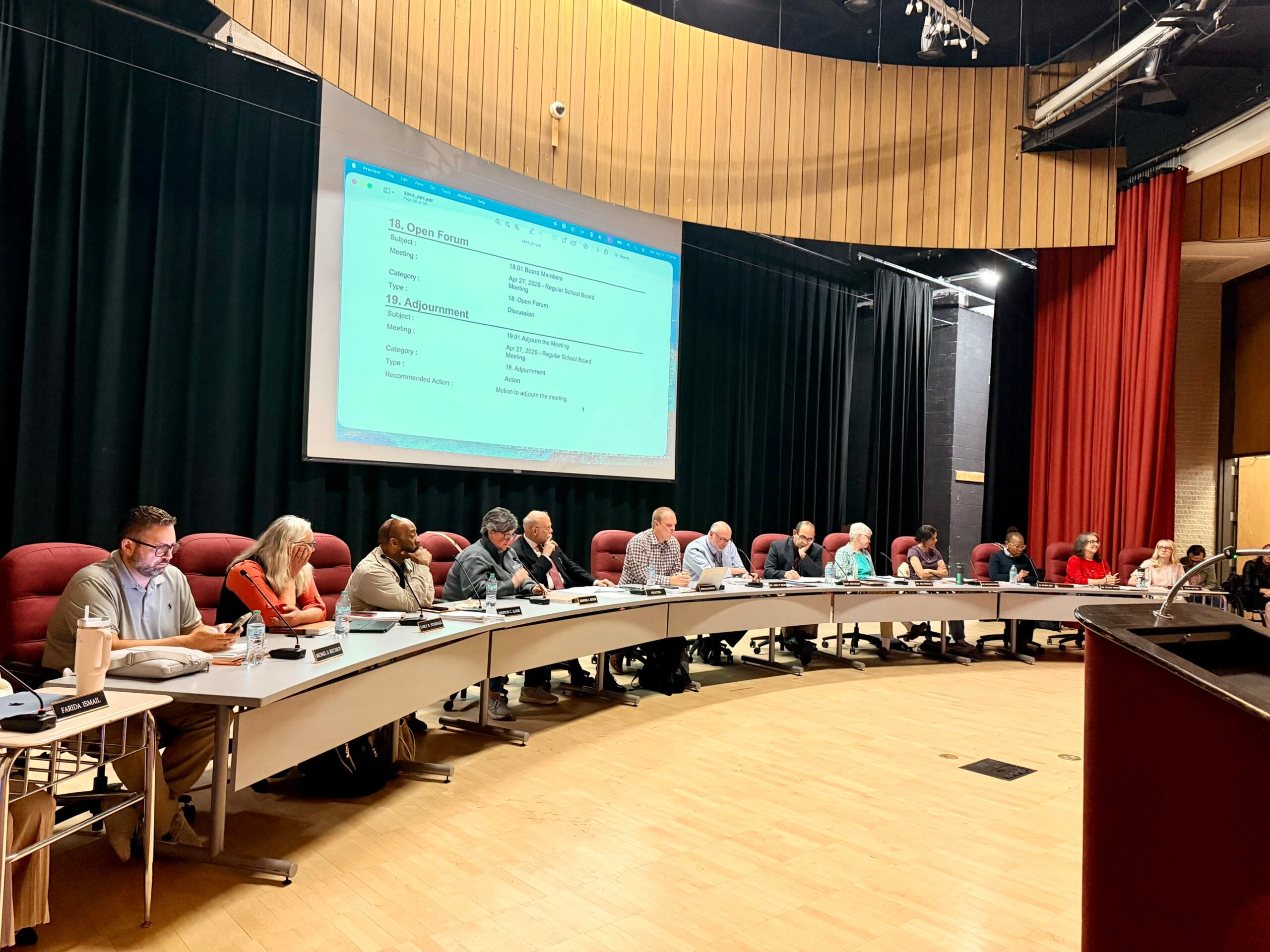
BETHLEHEM, Pa. — A month after roughly 70 to 100 people packed the Bethlehem Area School District board to demand free lunch for every student, the campaign returned in a quieter form Monday night — six speakers in public comment, a check from The GIANT Company tied to student food programs, and organizers and board members alike pointing to last week’s finance committee meeting as the moment the conversation shifted.
Monday’s regular meeting did not include a vote on the federal Community Eligibility Provision, the program advocates have spent months pushing the district to adopt. CEP allows qualifying districts to provide breakfast and lunch to every student at no cost.
The April 20 finance committee meeting outlined three possible paths: enrolling the nine schools whose share of identified low-income students is high enough to qualify for 100 percent federal reimbursement; a Title I-only rollout covering 12 schools; or a smaller pilot of one or more eligible schools.
Title I is a federal program that sends additional funding to schools serving high concentrations of low-income students.
Metz, the district’s dining services contractor, also included a financial scenario in its projections labeled “DW CEP” — apparently districtwide CEP — showing a budgeted deficit roughly $1 million larger than the district’s standard preliminary budget. That figure would be about double the $500,000 annual shortfall Superintendent Jack Silva cited in a press release issued the morning of the March 23 meeting.
Taken at face value, the projection has roughly doubled in a month and tripled since 2023, with the underlying math tightening rather than loosening.
Federal CEP reimbursement is tied to how many of a district’s students count as low-income on government records — a figure largely drawn from SNAP enrollment.
After Congress tightened SNAP eligibility last year, fewer BASD families are counted, and the share of meals the federal government would fully cover at the district has fallen from about 77 percent for the current school year to roughly 70 percent projected for next year, according to Metz’s data.
A pilot now appears to be the most likely first step, Director Kim Shively said in an interview after Monday’s meeting, with “several possibilities” still on the table.
A check from Giant — and a calmer crowd
The board opened the meeting by recognizing The GIANT Company and accepting a $14,026.50 check from the company’s Feeding School Kids initiative, presented by an assistant store manager and a company representative.
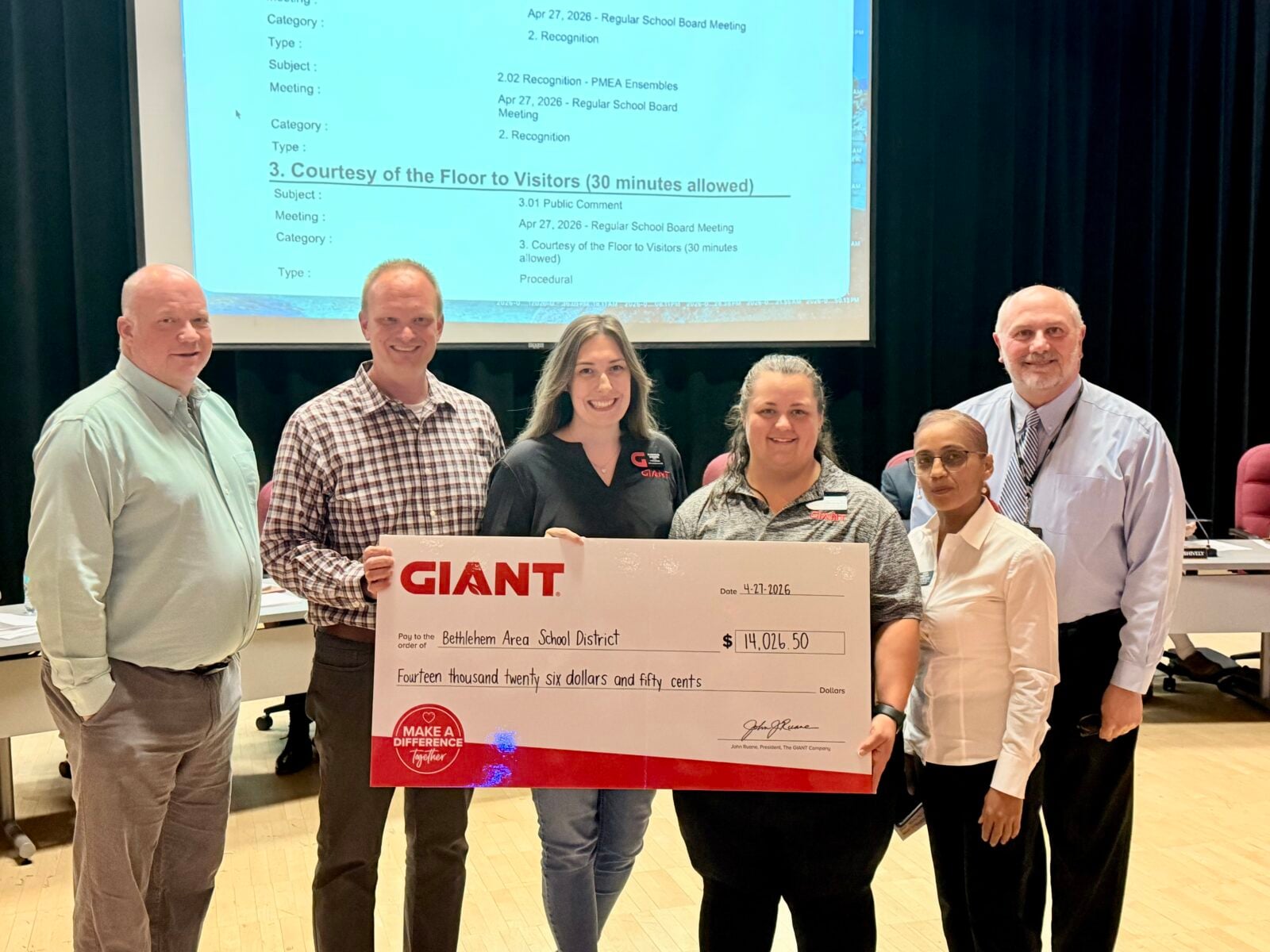
Business Manager Frank Pearn thanked the company on the district’s behalf and described the donation as part of an ongoing effort to address student hunger.
The program is funded primarily through customer round-ups at Giant, Martin’s and Giant Heirloom Market registers, with proceeds and a corporate match directed to local school food programs. BASD has been among the program’s top recipients in recent years, according to past company announcements.
When public comment opened, six speakers — some aligned with the Lehigh Valley chapter of the Democratic Socialists of America, the group driving the campaign — thanked directors for the finance review and pressed them to enroll as many schools as possible.
Sebastian Zawierucha, an LVDSA organizer, opened by relaying the story of a district mother whose son’s friend has accumulated more than $800 in lunch debt.
The friend’s son, an eighth-grader, used money he had earned shoveling snow to try to pay it down, Zawierucha said — and was told by a guidance counselor not to, that the friend had four more years to pay it off himself.
Louise Torres, a 32-year veteran high school Spanish teacher and the parent of two Liberty High School graduates, told the board she now watches the issue as a retired homeowner with no children in the district but still believes it is worth funding. “Hungry kids cannot learn, they cannot concentrate,” she said.
Michael Friend pushed for a broader pilot than what he said had been floated. Based on four years of state CEP data, BASD could enroll 14 schools at a 100 percent reimbursement rate, he said. “The best time to enroll our district in CEP was years ago. The second-best time is right now.”
Susan Ott, who told the board she runs a CEP program at Arts Academy Charter Middle School, said she reviewed her school’s monthly food invoices and compared the meals the school paid for with the federal government reimbursement she received under CEP.
The reimbursements covered the food costs and then some — enough surplus, she said, to roughly cover one food service worker’s annual salary. She urged directors not to evaluate any pilot solely on the basis of the balance sheet. “Talk to the food service workers who are in the pilot program,” she said.
Two other speakers — Samantha Sammayoa and Michael Baylor — told personal stories about the stigma students face under the current system, with Sammayoa describing classmates who developed lifelong eating disorders and Baylor, a 50-year Bethlehem resident, urging the board to spare students “the humiliation of being called out in front of peers.”
The board’s read
Director M. Rayah Levy responded first. She told advocates their organizing had “challenged me to look beyond a single narrative” and placed their effort in a tradition stretching back to the Rev. Martin Luther King Jr. and the Poor People’s Campaign.
But she also pushed back on the idea that a single district can solve the problem. In states with universal school meals — she named New York, California, Massachusetts and Vermont — those programs exist because the state made a policy decision to fund them, she said.
The question, she told advocates, is not whether students should be fed but how that responsibility is structured and sustained. She urged the campaign to take its work to the state level.
Director Winston Alozie thanked advocates. “You’ve elected the people you see before you to do the work,” he said, encouraging them to push state and federal lawmakers as well.
In an interview afterward, Shively credited the April 20 finance committee meeting for the change in tone. The presentation “really sort of laid everything out” and made clear what the stakes were, she said. “It helped to make people feel like they were heard.”
Shively said real concerns remain — Title I funding chief among them — and described the issue as more complicated than some advocates have characterized it. A pilot, she said, would let the district see how participation and reimbursements move before any broader rollout. She echoed Levy’s point at the state level, noting that Pennsylvania already funds universal breakfast.
The campaign’s read
Zawierucha, in an interview after Monday’s meeting, said the calmer tone reflected what LVDSA considers a meaningful shift. “This is where we knew we were going to be,” he said. The group has refocused on what it sees as an achievable target: 11 schools the group’s calculations show would qualify for full reimbursement.
By LVDSA’s math, a districtwide program would cost the average property owner about $10 a year, with the lower end possibly as low as $2.
He credited the April 20 meeting as the catalyst, saying the board pressed Metz, the district’s contracted dining services provider, and finance staff harder than at past CEP discussions.
“Every single additional school that gets in saves debt from our people,” Zawierucha said.
The federal CEP enrollment deadline for the coming school year is June 30. The board has not set a date to vote on any of the options outlined on April 20.
Also at the meeting
All nine board members were present. A national outage of the BoardDocs platform left agendas unavailable online, and the district distributed paper copies.
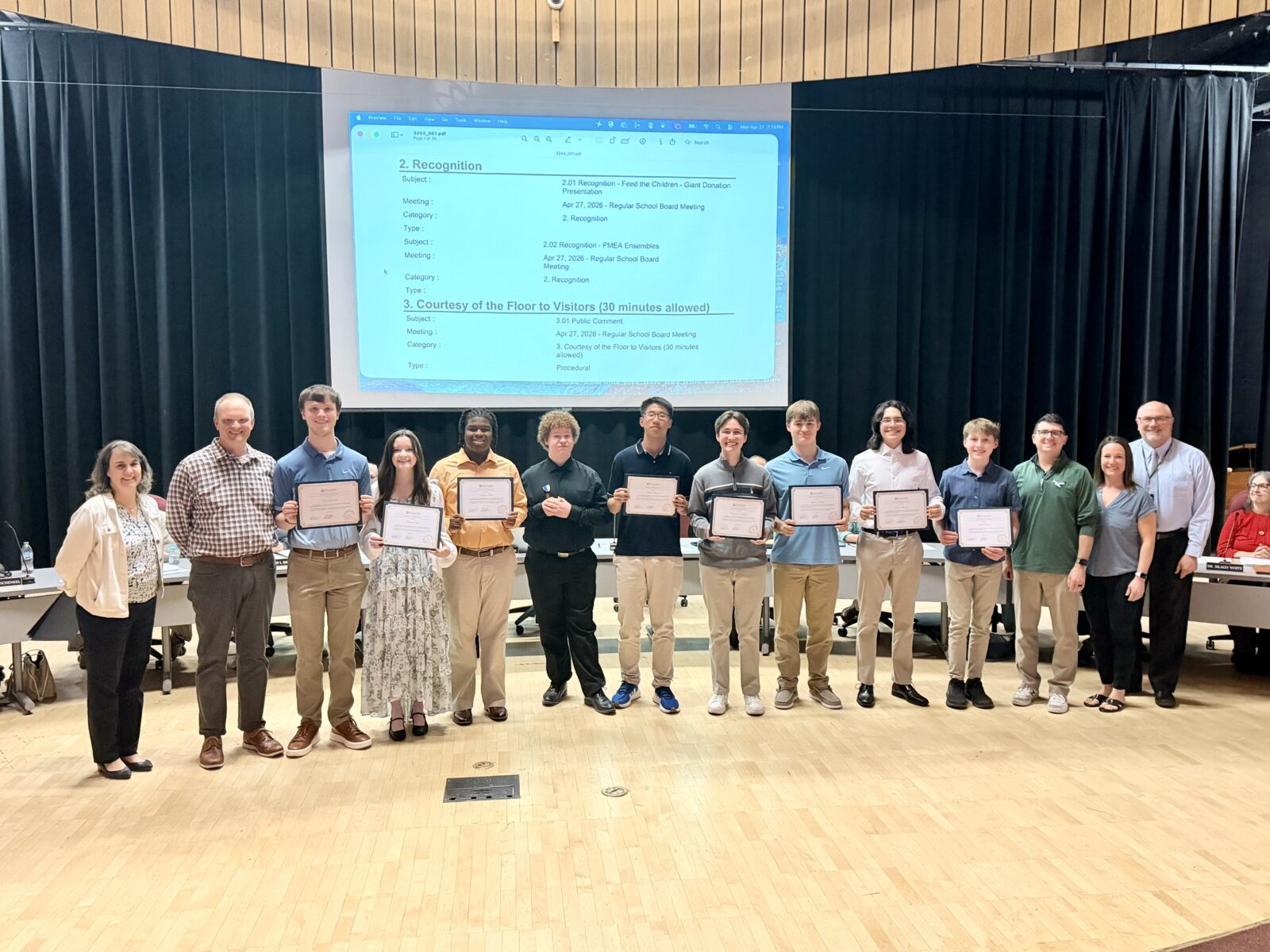
The board recognized students from Freedom and Liberty high schools and heard that BASD competitors had brought home two gold and two silver medals from the SkillsUSA state competition, with the gold medalists advancing to nationals in June.
As the board moved through its finance items — including spending on the district’s vehicle fleet — Alozie noted that most were already accounted for in the current budget.
The board has a special meeting scheduled for May 11 to adopt the proposed final budget, according to the district’s meeting schedule.

I send the Valley’s top stories Monday, Wednesday and Friday mornings. Free, and you can leave anytime.
By subscribing, you agree to our Privacy Policy and consent to receive updates.