Moravian Academy students dissect cadaver arm in St. Luke’s-led anatomy lab

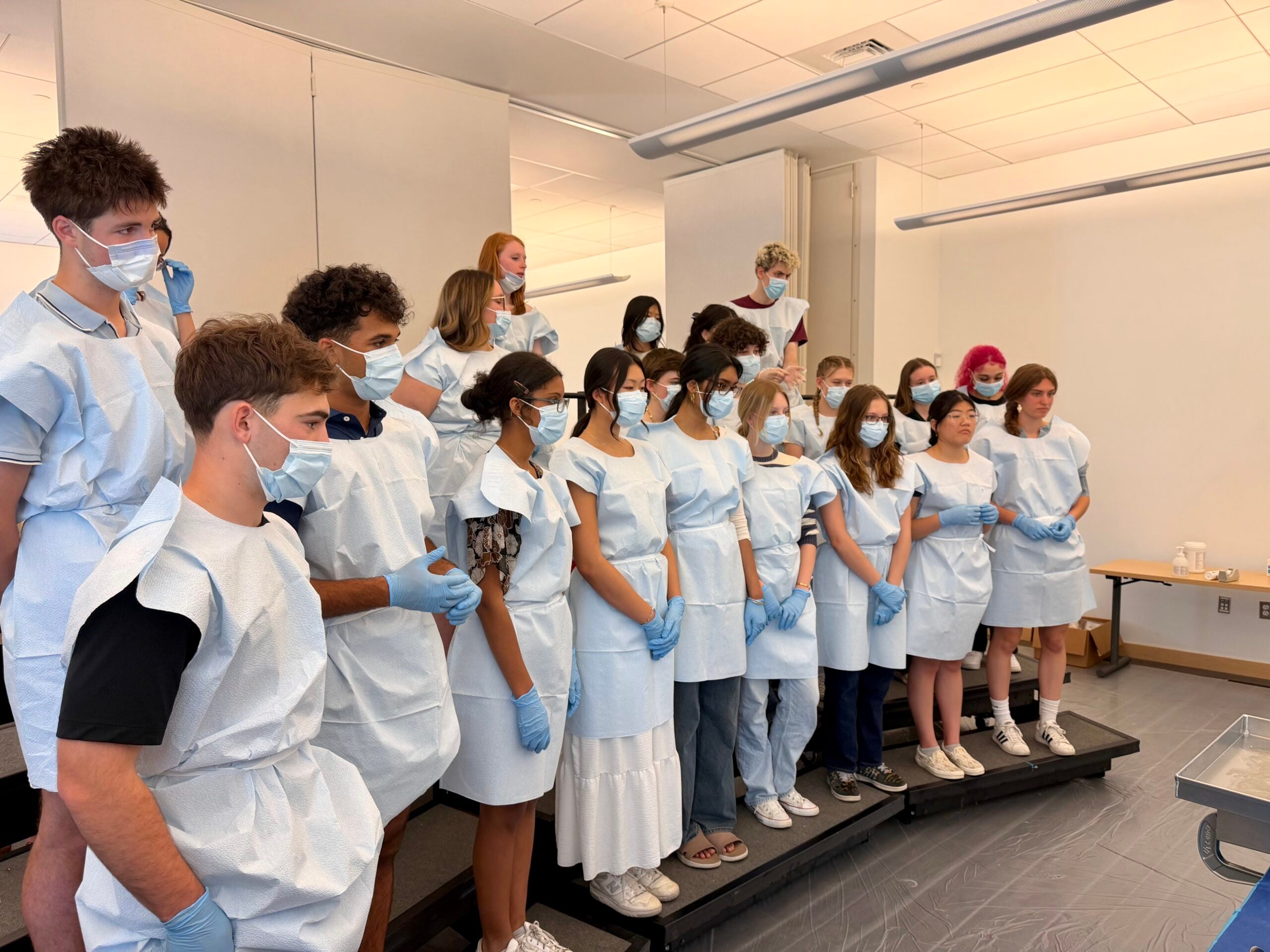
BETHLEHEM, Pa. — Juniors and seniors from Moravian Academy’s anatomy and physiology classes spent Tuesday afternoon making incisions into a human cadaver arm under the guidance of two St. Luke’s University Health Network physicians in a hands-on lab the school says is typically reserved for college and medical school students.
About 30 students from biology teacher Wendy Sheetz’s two anatomy and physiology sections gathered at the Moravian Academy Athletic and Wellness Center on the school’s Merle-Smith Campus at 4313 Green Pond Road for the program, which is now in its fourth year.
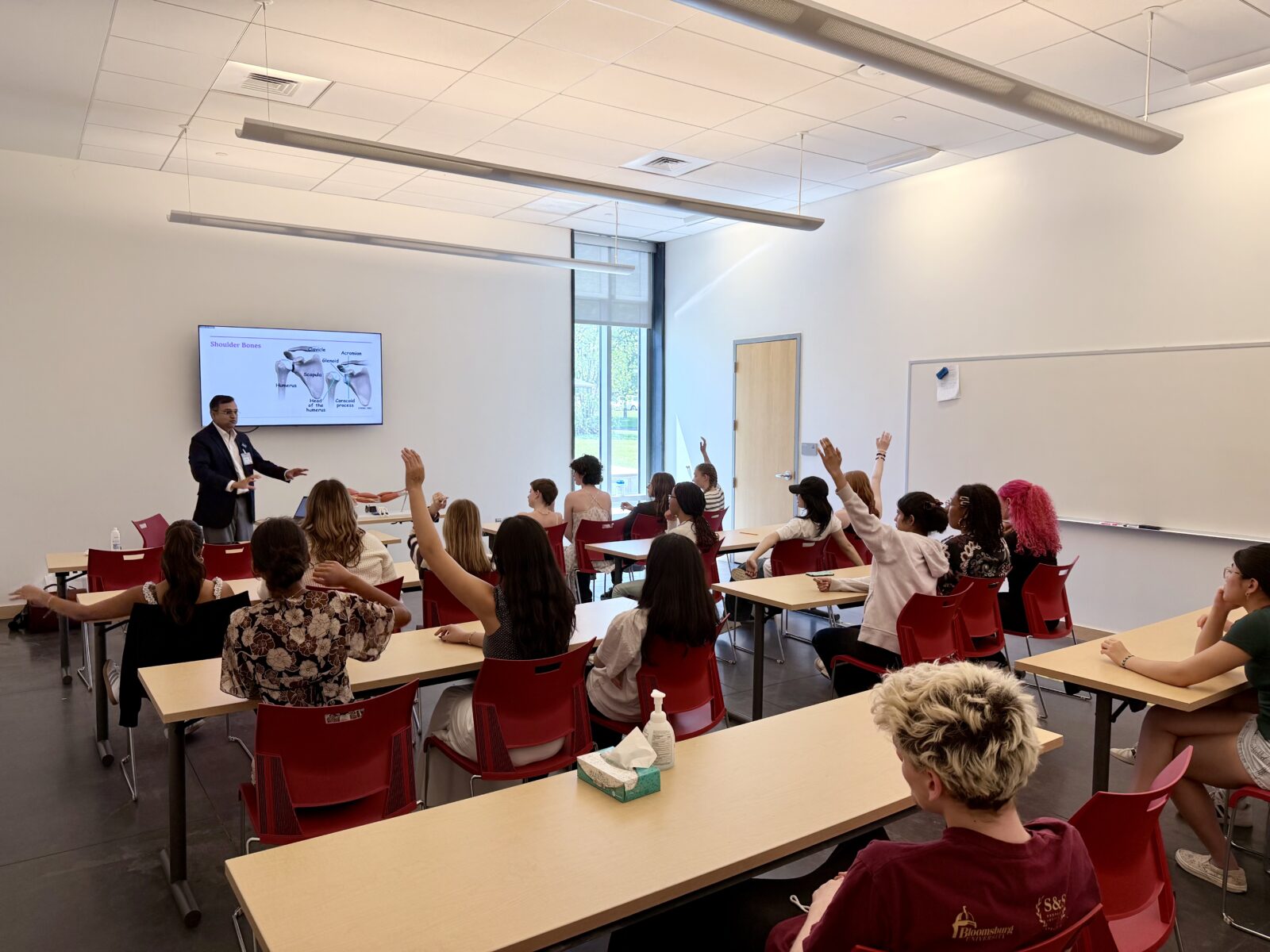
The session opened with a roughly 30-minute lecture on the anatomy of the arm, led by Maheep P. Vikram, MD, a St. Luke’s primary care sports medicine physician. Vikram covered the wrist, elbow, and shoulder before running live ultrasound demonstrations on student volunteers.
Vikram pushed the class beyond memorizing names of bones and muscles, urging students to feel the structures in their own arms.
“What I’d really like you guys to do is to get some chance to do a hands-on, have a look at at least one muscle in your own arm,” he said, “so you can understand, then you can make a clinical correlation of how that thing moves.”
Stay informed on Lehigh Valley education
Get the latest education news and updates from across the Valley.
By subscribing, you agree to our Privacy Policy and consent to receive updates.
To illustrate that the shoulder is more than a single ball-and-socket joint, Vikram had students raise an arm overhead while a partner held the shoulder blade still. At that point, the arm could no longer reach vertical. Movement above a certain point, he said, comes from the shoulder blade gliding across the rib cage, not from the ball-and-socket joint alone.
He worked through the four rotator cuff muscles, the carpal tunnel, and the elbow ligament made famous by Tommy John surgery, and tied each structure to an injury students might recognize: tennis elbow, golfer’s elbow, and the “Popeye” deformity from a torn biceps.
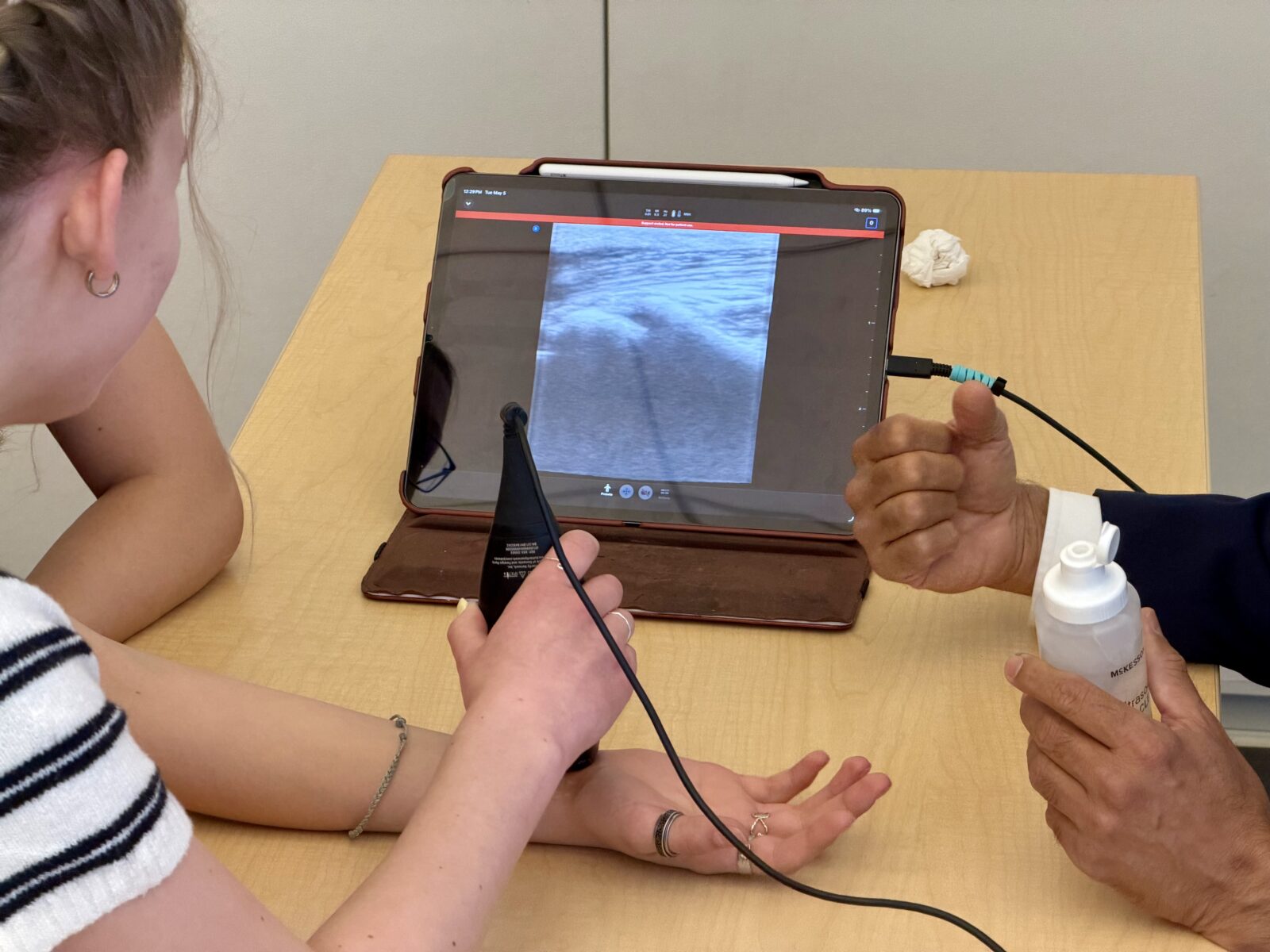
Students then viewed real-time ultrasound images of muscles, nerves, and tendons in their classmates’ limbs before moving down the hallway to the dissection room.
There, the students donned full-body protective gowns, gloves, and masks. The right arm — donated by a 52-year-old woman who weighed 215 pounds — had been mounted on a stand and prepared with surgical instruments.
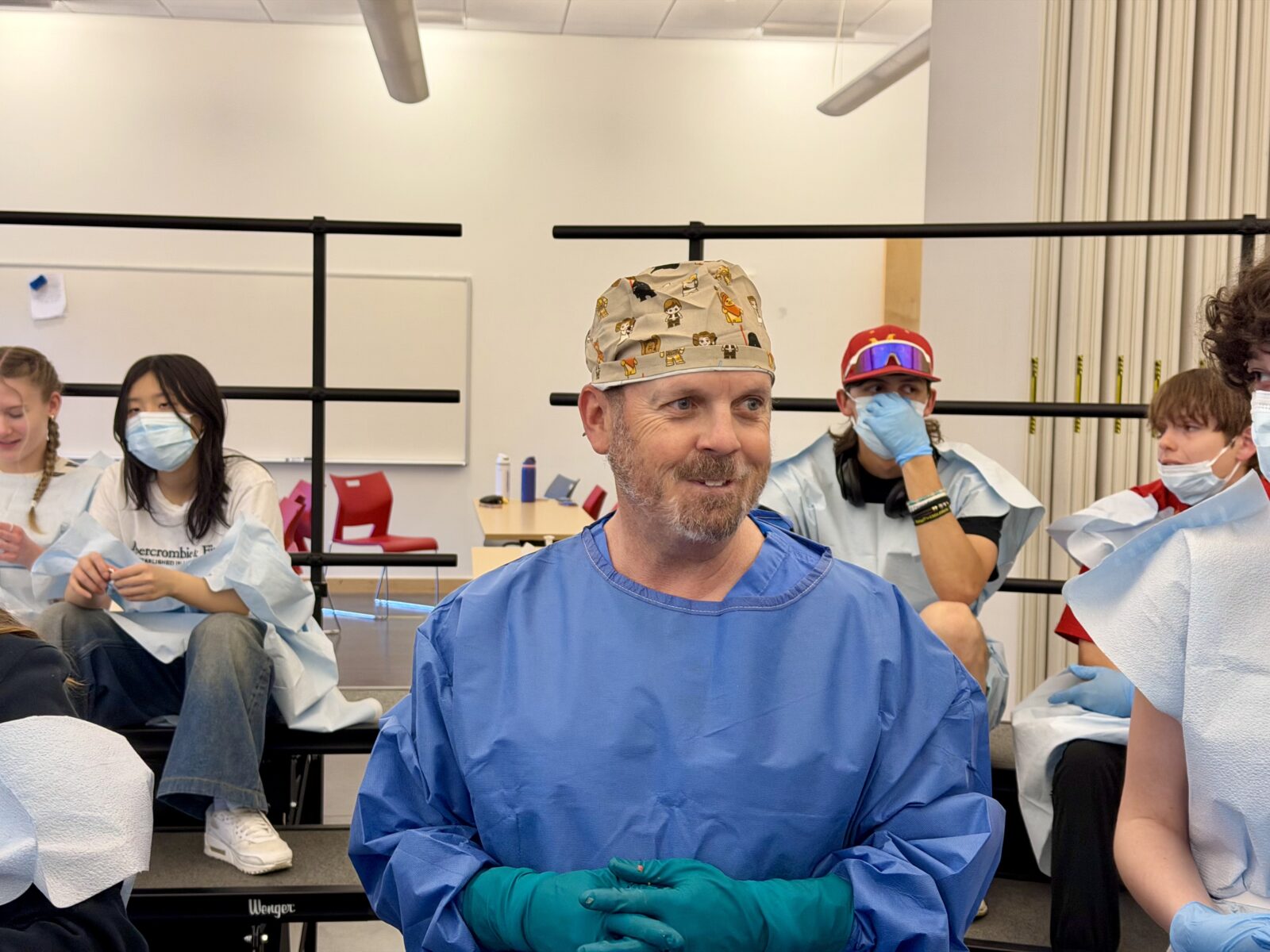
The lead physician for the dissection was Gregory F. Carolan, MD, chief of orthopedic sports medicine and shoulder surgery at St. Luke’s and a Moravian Academy parent. He was assisted by Nareena Imam, MD, a second-year orthopedic surgery resident at St. Luke’s.
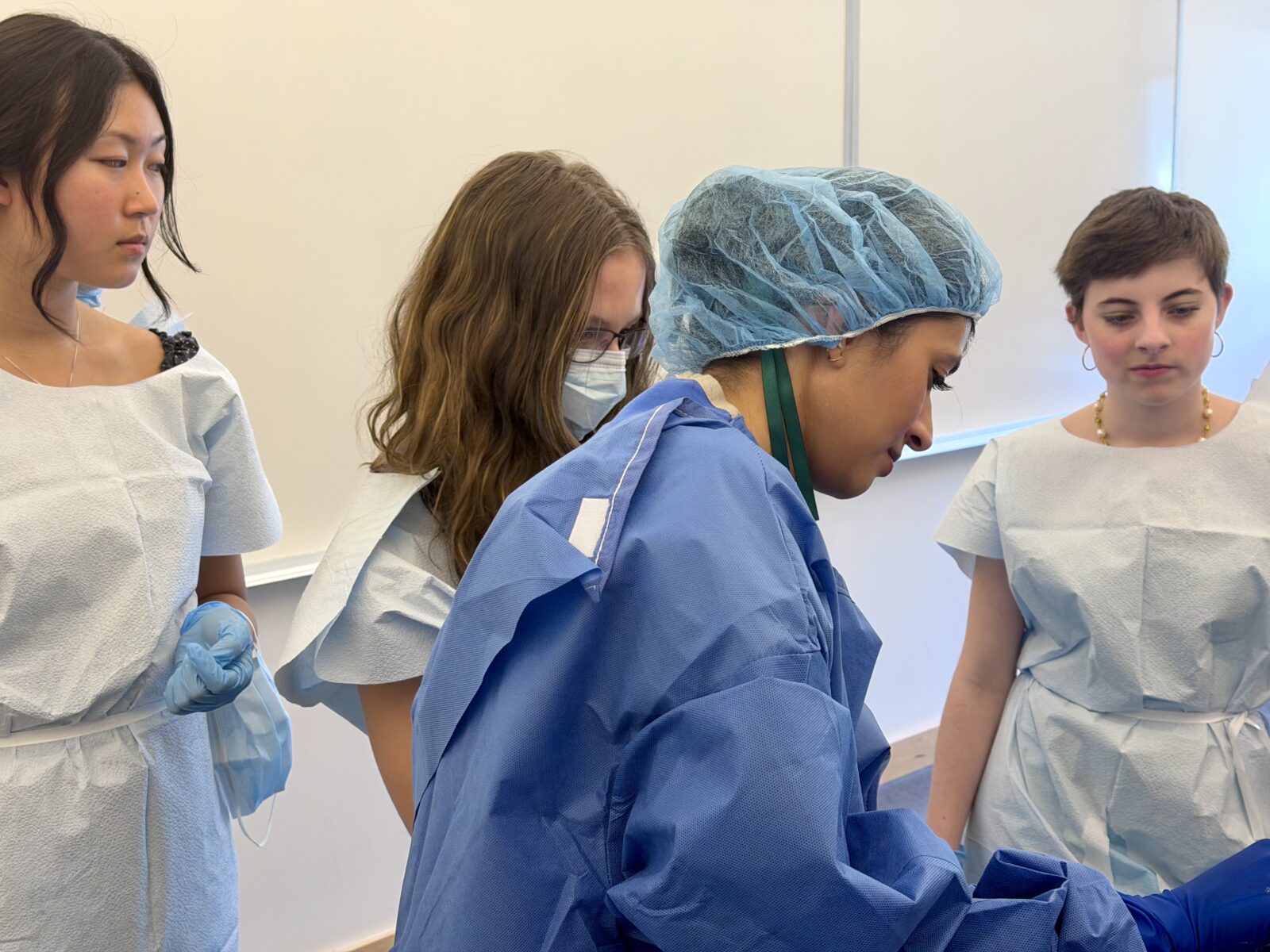
Before cutting, Carolan asked students to keep the specimen’s source in mind.
Stay informed on Lehigh Valley education
Get the latest education news and updates from across the Valley.
By subscribing, you agree to our Privacy Policy and consent to receive updates.
“Just remember someone’s gift, that someone died and they gave it to us so we can learn from it,” he said. “I always—I’m very adamant about being respectful to everything and making sure we understand that this is a very special thing that this person allowed us to do.”
Carolan walked students through the shoulder girdle—scapula, clavicle, and surrounding muscles—and explained that the shoulder is connected to the rest of the body only through the collarbone, which is engineered to break under impact rather than transmit force into the chest.
He cited a patient he treated that morning whose clavicle had fractured when she was thrown against her own knees inside a van, making a sharp turn.
He also explained the surgical concept of an internervous plane—the gap between two muscles supplied by different nerves, which surgeons exploit to reach a joint without severing the nerve supply to either muscle. In the shoulder, he told students, that gap is the deltopectoral interval, between the deltoid and the pectoralis major.
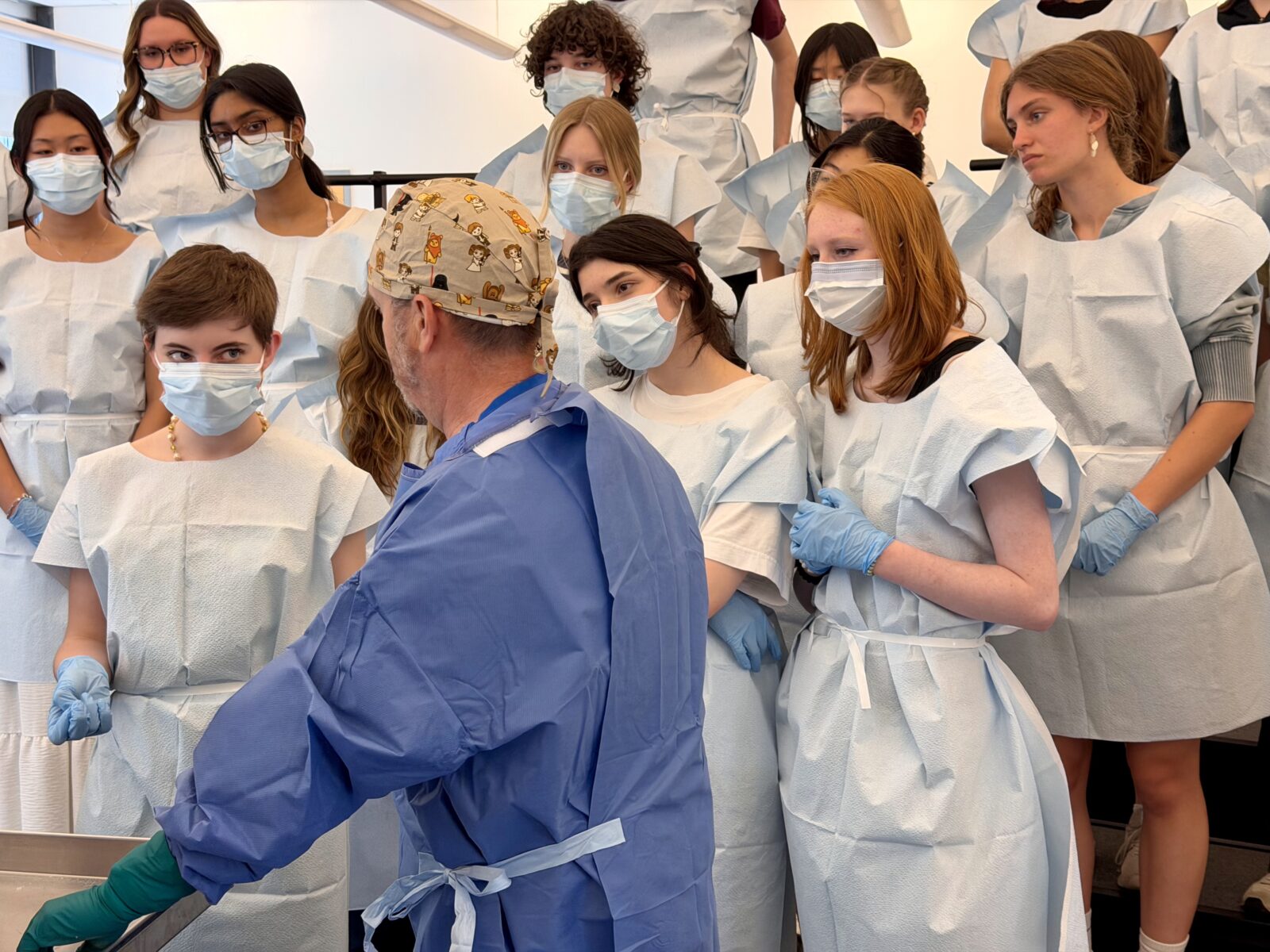
Students then took turns making incisions, palpating tendons, and identifying structures.
“This is the first time I’ve ever gotten to work with any sort of medical cadaver,” said Liv Seymour, a Moravian Academy student who said they want to become a forensic pathologist or medical examiner.
“Being able to feel things like this is so cool, because I wasn’t sure if I would actually be able to do it. Talking about it is one thing, but then actually being hands-on, like, incisions and feeling all the tendons, is a whole other thing,” they said.
Seymour said seeing the elbow joint changed their understanding of common injuries.
“It’s a really small thing, and I always pictured it much larger,” they said. “Being able to actually see the movement gives me a lot more insight into why a lot of injuries happen.”
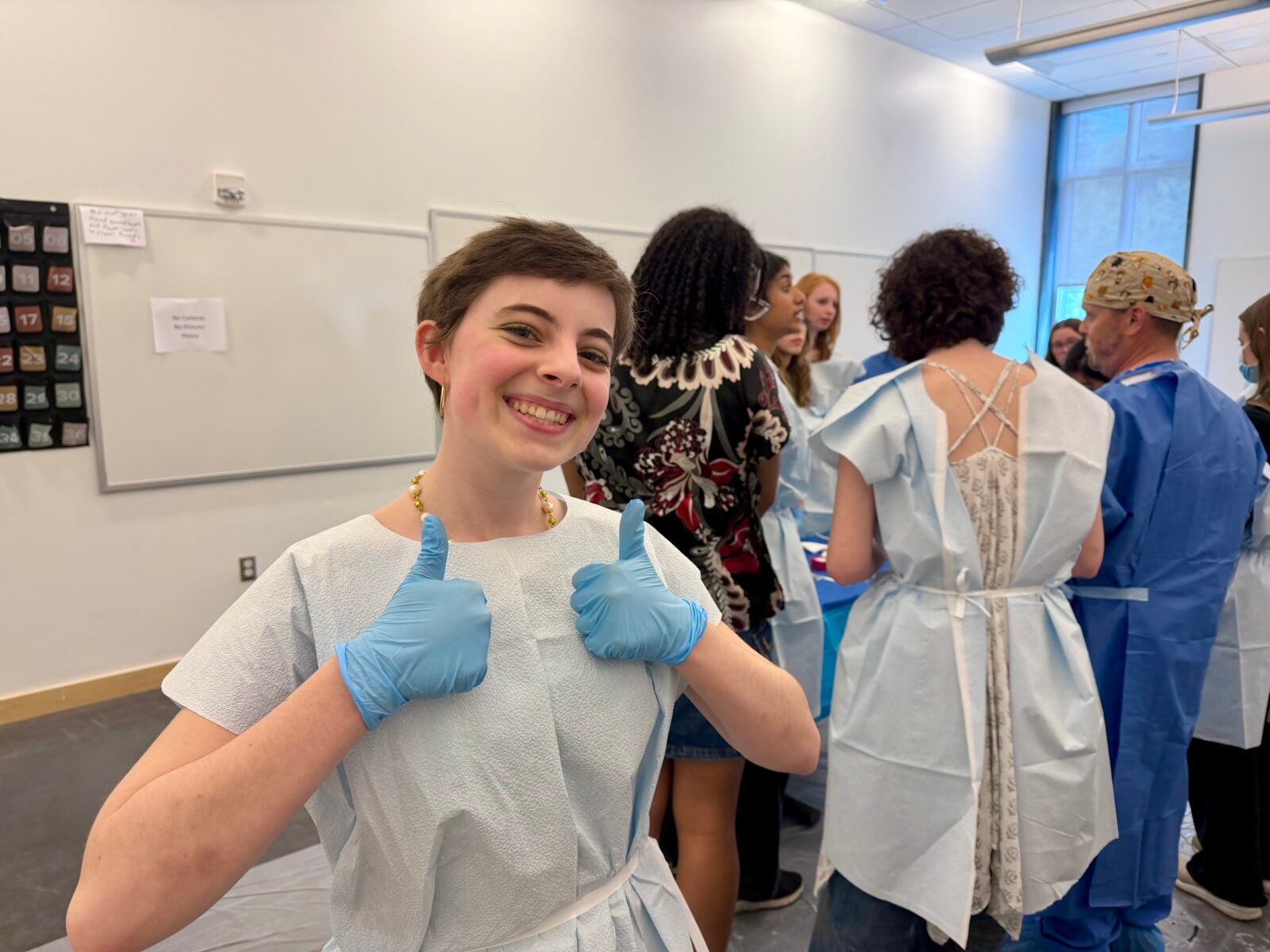
Sheetz, who has taught at Moravian Academy since 1999 and moved up to the high school in 2018, said the lab serves as the capstone of the muscular and skeletal units her students study throughout the year.
Earlier in the year, students dissected cats, cow eyes, and sheep hearts and brains, she said.
“For anatomy and physiology, it’s kind of the culmination of our muscle and skeletal units, where they learn all the muscles in the body and all the bones in the body, and so they get to see them in real life,” Sheetz said.
Sheetz said many students who go through the class go on to pre-med tracks in college, and some return years later to tell her the lab was a formative experience.
“A lot of kids that leave here typically are going—many going pre-med—and so I hear from them later, ‘Oh, that was so great, I don’t get to do that again until med school,’” she said. “For some kids, it really reinforces what they think they want to do.”
Sheetz said the school’s relationship with St. Luke’s grew out of its athletic training program, and that two of the participating physicians are also Moravian Academy parents. St. Luke’s Sports Medicine sources the specimen, and the school splits the cost with the network, while the physicians donate their time. She did not know the specific dollar amount.
The specimen was supplied through United Tissue Network, a nonprofit non-transplant anatomical tissue bank based in Phoenix and accredited by the American Association of Tissue Banks, according to Stasia Markley, sports medicine coordinator at St. Luke’s, who handled logistics on site.
Markley said St. Luke’s Sports Medicine has run roughly 15 of these labs in the current school year at high schools across the Lehigh Valley and surrounding area, including Nazareth, Parkland, Notre Dame, Easton, Whitehall, Phillipsburg, and Warren Hills.
Specimens arrive marked as biohazard material and are returned via two-way shipping the same day, Markley said. The tissue company provides basic donor information — sex and age — but identifying details are withheld, she said.
Sheetz said the lab is the end-of-year experience for her seniors, who have about nine days of school remaining.
“Most kids don’t get this opportunity,” Sheetz said, “and the fact that Dr. Carolan lets them actually dissect and get in there and not just observe makes it such an incredible hands-on experience for them.”
Moravian Academy is an independent, preschool through grade 12 school with campuses in Bethlehem and Allentown. St. Luke’s University Health Network is a regional health system headquartered in Bethlehem.
Stay informed on Lehigh Valley education
Get the latest education news and updates from across the Valley.
By subscribing, you agree to our Privacy Policy and consent to receive updates.