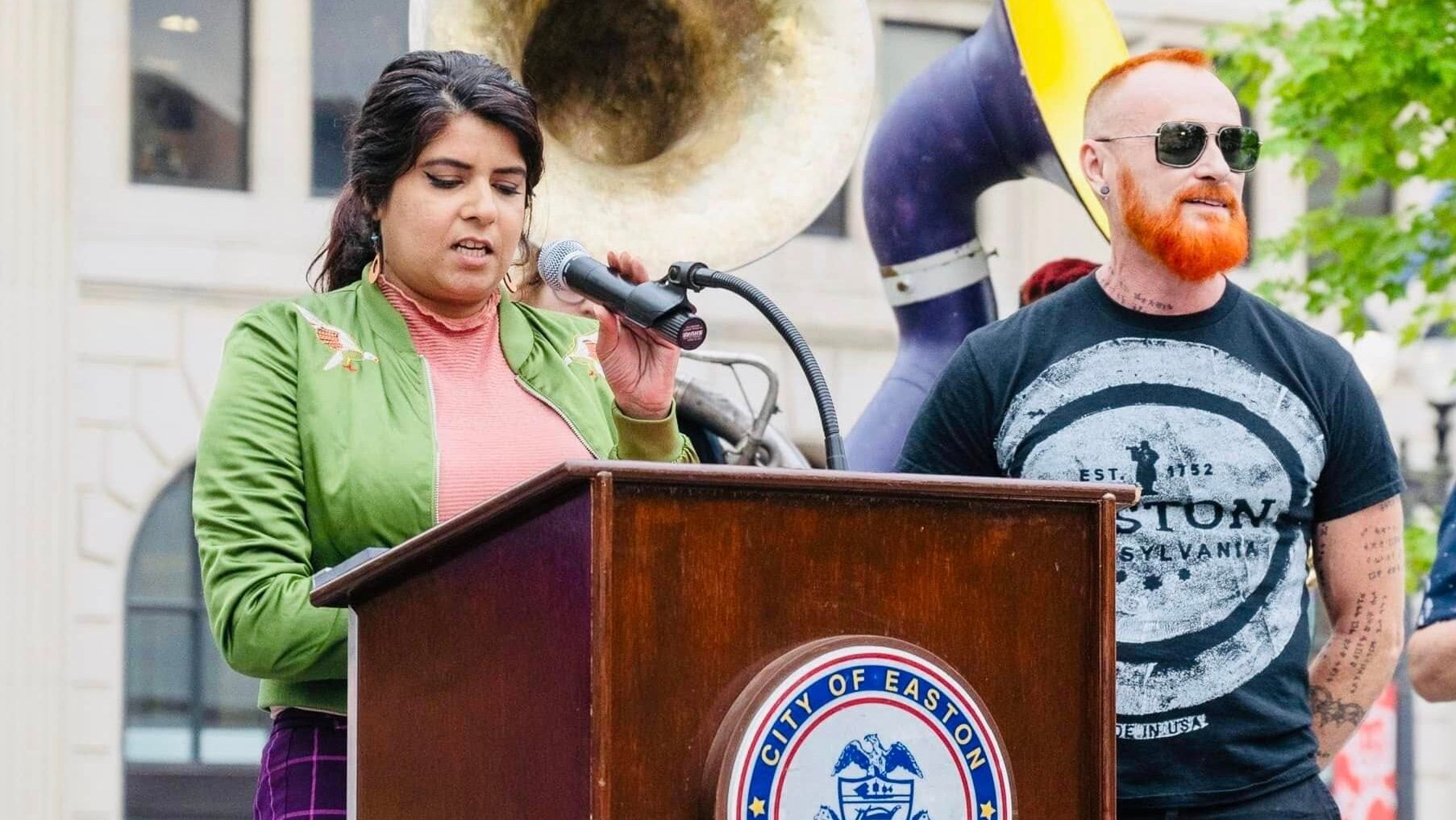
A Pennsylvania appellate court has ordered Taiba Sultana, a former Easton City Council member, removed from the May 19 Democratic primary ballot for the state’s 18th Senate District, ruling that her nomination petition contained a material defect that had the potential to mislead voters.
Sultana has appealed the ruling to the Pennsylvania Supreme Court. The Pennsylvania Department of State has since recorded her name as removed from the ballot, pending the appeal.
Commonwealth Court Judge Anne E. Covey issued the ruling April 1, granting a petition filed by four registered voters who objected to Sultana’s candidacy. Sultana had been challenging incumbent state Sen. Lisa Boscola in a primary that Spotlight PA had flagged as one of the more competitive legislative races this cycle.
Sultana filed two notices of appeal and a jurisdictional statement with the Pennsylvania Supreme Court on Thursday, April 2, according to the Commonwealth Court docket.
The decision turns on a single word: “self-employed.”
Under the Pennsylvania Election Code, candidates are required to disclose their profession, business or occupation on their nomination petitions. Sultana listed only “self-employed” in the occupation field, without specifying the type of work.
Judge Covey found that omission legally insufficient, writing that “by merely declaring that she is self-employed, without specifying the occupation in which she is self-employed, Candidate deprived electors of information the General Assembly and the Department of State deemed sufficiently material to appear at the top of each Nomination Petition page while electors apply their signatures.”
The court concluded the defect was both material and incurable, noting that Sultana — despite being aware of the objectors’ argument and the relevant case law — never offered an explanation of her actual occupation or argued that “self-employed” alone could not mislead voters.
“The effect of Candidate’s response is no different than if she had simply put employed,” Covey wrote.
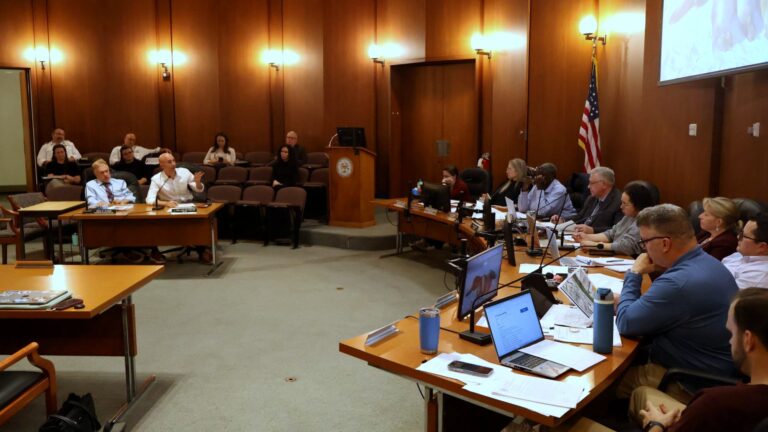
Sultana appeared at the March 25 hearing pro se — without an attorney — and denied that her use of “self-employed” was intended to mislead anyone, calling any effort to set aside her petition “hyper-technical.” She argued that neither the Election Code nor existing case law required her to supply more detail than she did.
The court was not persuaded.
The lower court case is now listed as closed. “We are not backing down,” Sultana said in a statement reported by WFMZ. “We are fighting to ensure that voters — not technicalities — decide this election.”
Republican Scott Janney, a director of gift planning for the Salvation Army, is set to face the Democratic nominee in the November general election.
The four objectors — Patricia M. Hitzel, Celeste Lillian Dee, Patricia Joan Bruno and Pamela A. Panto — were represented by Raymond Lahoud, an Allentown immigration attorney who chairs Lahoud Law Group, P.C.
According to Armchair Lehigh Valley, a local political blog, Lahoud formed a political action committee, PA Citizens PAC, in 2024 and funded it with $70,000 of his own money. The PAC’s stated mission was to defeat Sultana, who ran unsuccessfully against incumbent state Rep. Bob Freeman in the 136th House District primary.
Armchair Lehigh Valley also reported that Dee is a campaign consultant who has been active in Boscola’s campaign. Panto is the wife of Easton Mayor Sal Panto Jr. Those affiliations do not appear in the court filings.
In a statement, Lahoud said the ruling “underscores the importance of transparency and strict compliance with Pennsylvania’s Election Code.”
“The integrity of the electoral process depends on candidates providing voters with accurate and meaningful information,” Lahoud said. “Today’s ruling affirms that those standards will be enforced.”
Objectors had also challenged 417 signatures on Sultana’s petition and separately argued that a circulator, Kanza Nawaz, had misrepresented her residential address. Sultana had submitted 901 signatures in total, above the 500 required for a state Senate race.
The court rejected both of those challenges. On the address question, Judge Covey found that objectors failed to produce evidence proving Nawaz did not actually live at the address she listed when she circulated the petition.
On signatures, after the parties conferred with a voter registration system operator during a recess, objectors acknowledged that Sultana had enough valid signatures to remain on the ballot — if the Nawaz-circulated pages were not thrown out.
The question of occupation was not resolved in Sultana’s favor.
The court’s order directs the Pennsylvania Secretary of the Commonwealth to remove Sultana’s name from the May 19 Democratic primary ballot.
The order also required each side to pay half the costs of the court reporter and the voter registration system operator, citing the parties’ failure to reach a pre-hearing stipulation on signature challenges as the court had directed.
In her opinion, Covey cited Pennsylvania Supreme Court precedent holding that defects are considered material when they have the potential to mislead an elector, and that the policy of liberally reading the Election Code “cannot be distorted to emasculate the requirements necessary to assure legitimate nomination papers.”
The case is In re: Nomination Petition of Taiba Sultana, No. 138 M.D. 2026.