EASTON, Pa. — Northampton County Council on Thursday night rejected a proposed Tax Increment Financing district for the redevelopment of the former Dixie Cup factory in Wilson Borough, voting 6-3 against the ordinance after a crowded public hearing that drew more than a dozen speakers.
It was the second time in roughly six months that county council has turned down the financing tool tied to the project, known as 1921 at Dixie Avenue. Council voted 5-4 against an earlier version in November 2025.
The proposal called for a 20-year, $26 million tax incentive to support developer Skyline Investment Group’s plan to convert the long-vacant factory in Wilson Borough into 405 apartments. Wilson Borough Council and the Wilson Area School District had already approved their portions, leaving the county as the final taxing body.
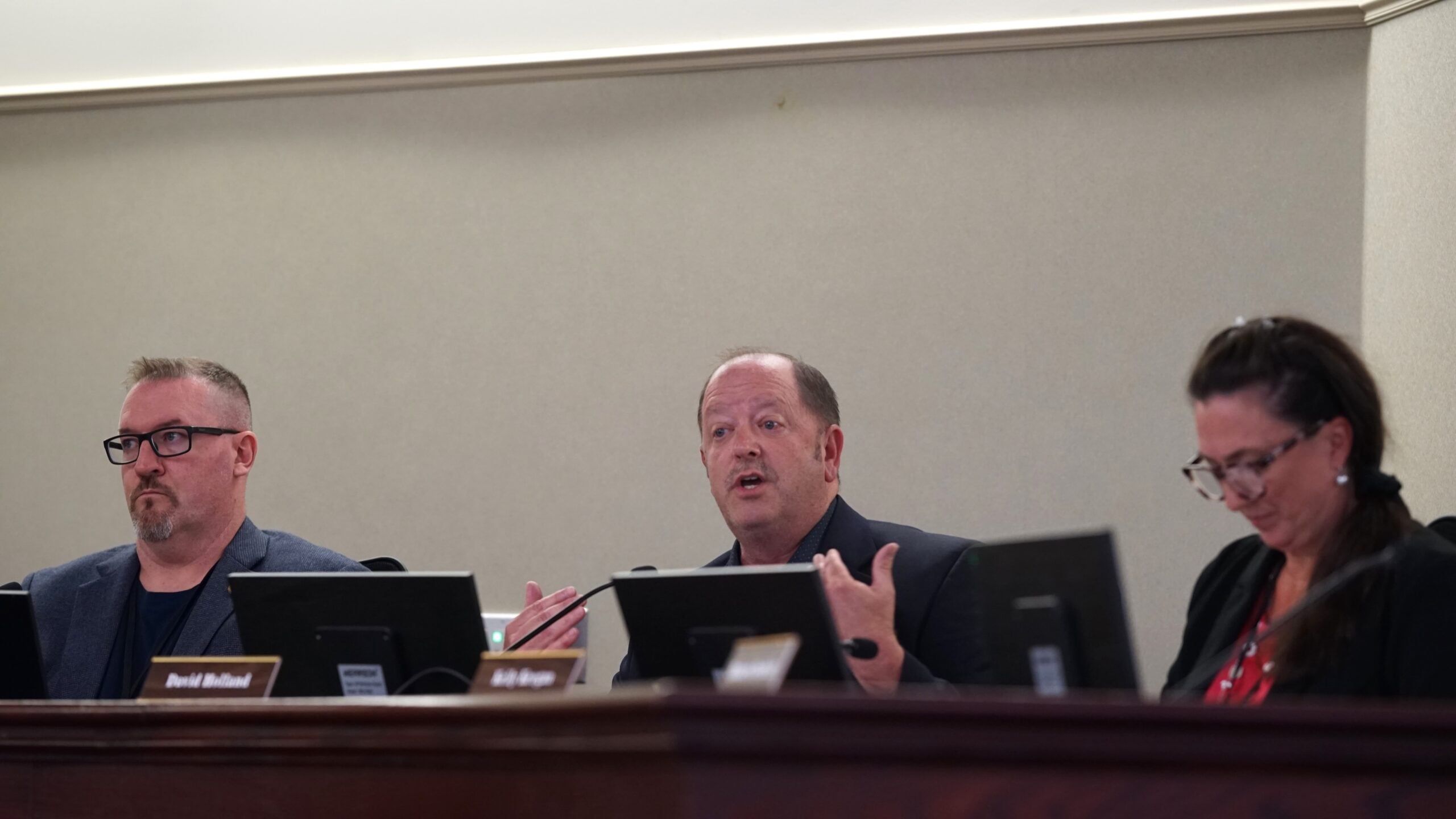
Voting yes: Commissioners Jeff Warren, Kelly Keegan and Council President Ken Kraft.
Voting no: Commissioners Tom Giovanni, David Holland, Jason Boulette, Theresa Fadem, Lori Vargo Heffner and Nadeem Qayyum.
The Northampton County Industrial Development Authority, which would issue bonds for the project, had asked council to delay the vote. Officials did not fully explain the reason on the record, but Council Solicitor Matt Deschler told members the authority was “not ready to proceed at this point” and described it as “a crucial cog” in the financing.
Warren made a motion to table the ordinance, citing the authority’s request, but it failed 4-5. Deschler told council adopting the ordinance was not a practical option given the authority’s position, leaving members to either take no action or vote the proposal down. Fadem then moved to deny the ordinance, triggering the final vote.
A TIF works like this: when a developer redevelops a property, its taxable value goes up. Under a TIF, the additional taxes generated by that increase don’t go to the county, borough or school district for a set number of years. Instead, they go toward paying off the redevelopment costs. The Dixie TIF would have run for 20 years.
In exchange for the 20-year tax diversion, Skyline had committed $2 million toward county affordable housing initiatives.
A divided dais
The split did not fall along party lines. The six no votes included the body’s only Republican, Giovanni; three of the four Democrats sworn in this January (Holland, Boulette and Fadem); returning Democratic incumbent Vargo Heffner; and Qayyum.
Warren and Keegan, both yes voters, defended the deal as the only viable path to redeveloping the long-vacant property and securing money for affordable housing.
“If we approve this TIF, we will have helped the only developer that came forward in 43 years,” Keegan said. “You had no options. You act like you had options. You don’t have any options.”
Warren asked Qayyum directly whether he had a proposal for how the county would otherwise secure $2 million for affordable housing. “If this body votes this down, we will not have that $2 million in affordable housing funds for future projects,” Warren said.
Qayyum did not name an alternative funding source. Citing a total of $79 million in TIF, grants and federal historic tax credits, he said the deal was lopsided. “We will not trade $79 million in taxpayer money for a $2 million promise,” he said.
Fadem, who said she had previously managed luxury apartment buildings, called the affordable housing carve-out insufficient. “Even at 94 percent occupancy, you’re still in a position to make money hand-over-fist,” she said. “$2 million is nothing compared to what they can make.”
Vargo Heffner, who also voted against the November 2025 version, pointed to the developer’s own position. “Mr. Bartee has said innumerable times he could do this without us,” she said. “So I believe him, I hear him, and I’m going to continue to vote no.”
Giovanni cited constituent pressure and the county’s fiscal posture, saying the 2026 county budget is roughly $40 million smaller than the 2025 budget. “They definitely don’t want me to vote for this, ’cause they know that eventually we’re going to have to come back and raise taxes,” he said.
Zrinski warned of warehouses, data centers
County Executive Tara Zrinski, speaking from the dais, said the project carries a total cost of $185 million against a stabilized market value of $147 million. She said the developer had spent $35 million on environmental remediation, including the removal of underground tanks, asbestos, radon and contaminated soil.
Zrinski argued that brownfield economics make affordable housing structurally impossible at the site, and warned that rejecting redevelopment of such properties leaves them open to less desirable uses.
“This is how these kinds of properties become susceptible to warehouses and data centers,” she said. “You will have to make this choice in the future.”
Wilson Borough officials backed the deal
Wilson Borough Mayor Don Barrett spoke in support, telling council the borough has watched the factory deteriorate for 43 years while neighboring municipalities have grown. The borough collects roughly $30,000 a year in taxes on the vacant property, Barrett said.
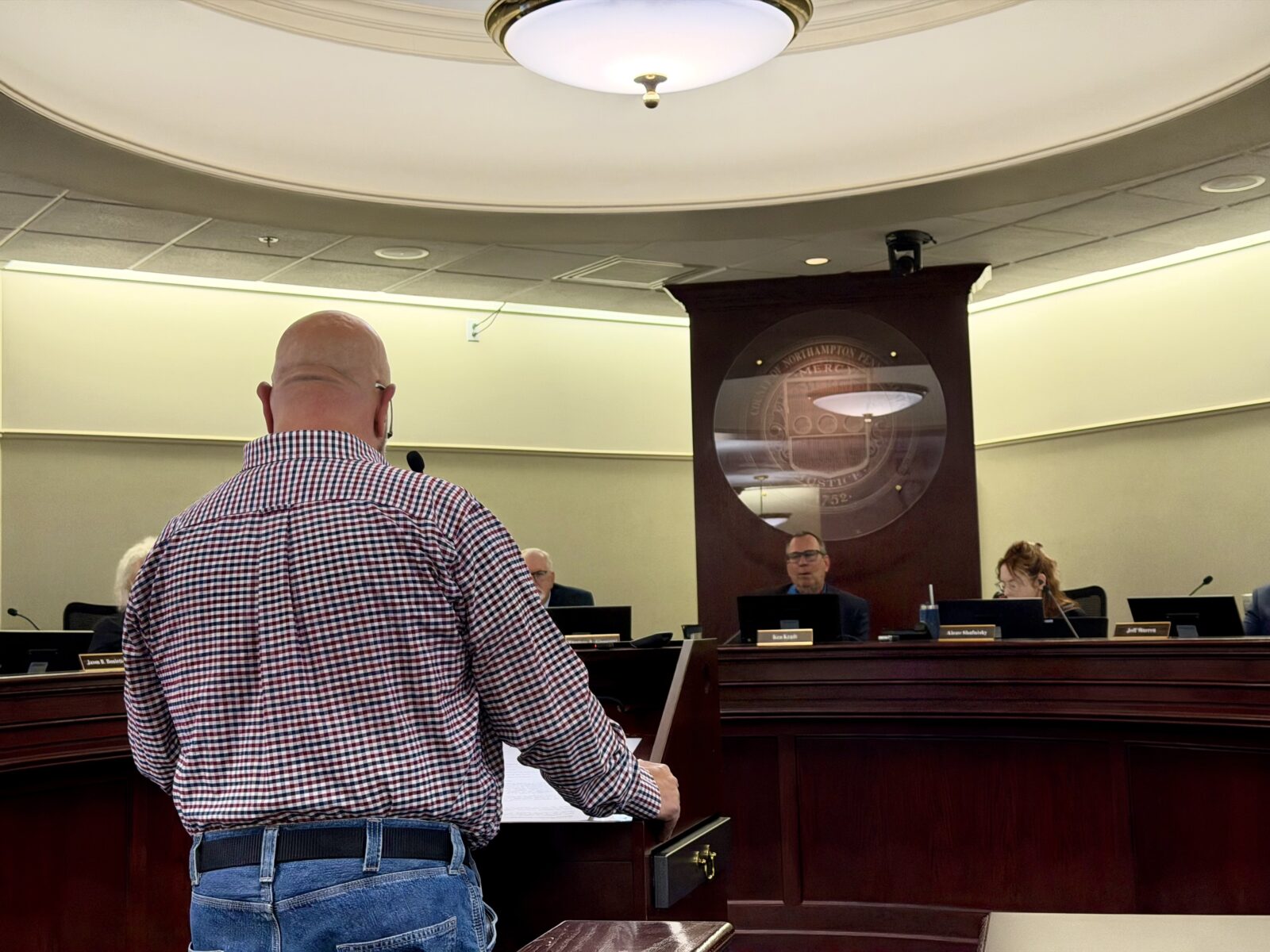
“I’m tired of being a bargain basement Wilson,” Barrett said. “So you want to keep all the luxury in Easton and push all the affordable to Wilson? Is that what we’re doing?”
Wilson Borough Council Pro Tem Shaun Gable said the impact would extend beyond the borough. “Everyone that I’ve heard complain about this are not Wilson Borough residents,” Gable said. “We are Wilson Borough residents. Both of our taxing bodies have approved this and want this to go forward.”
Lobbying allegation
In her remarks before the vote, Fadem alleged that a former county official had attempted to influence her position on the TIF through her employer.
“The former county executive contacted my current employer in what appears to be an attempt to influence my position on this matter,” Fadem said. “It’s clearly a breach of professional boundaries. My responsibilities as an elected official are independent of my employment, and any attempt to leverage my workplace in an attempt to sway my vote is inappropriate and unacceptable.”
Fadem said she had been undecided before the contact. “I was on the fence before, but I’ll tell you right now — it’s a solid no.”
Fadem did not name the former executive on the dais. The previous county executive, Lamont McClure, left office in December 2025.
Holland said he had also experienced lobbying he described as “borderline unsettling” but did not specify by whom.
Public comment
Speakers from across the political spectrum addressed council during the public hearing.
Donna Lavin, executive director of the Whole Life Center, an Easton-based food pantry, urged a no vote. “We serve over 25% of feeding the people in Wilson Borough, Easton, Palmer Township and the surrounding areas,” Lavin said. “They’re the working poor. And luxury apartments and giving a tax break for 20 years — none of you will be here 20 years from now.”
Armando Moritz-Chapelliquen, a Wilson Borough resident, said the developer paid $11 million for a site previously assessed at less than $3 million. “Vote no because the developer who can’t make this project pencil out, maybe shouldn’t have spent $11 million on a site that was assessed at less than $3 million,” he said.
James Bondro, also of Wilson Borough, told council the financing arrangement would put the burden on residents like him. “20 years on a tax contract — and you know who’s doing the financing? Me,” Bondro said. “The people of Wilson Borough are gonna finance this for 20 years.”
Speakers in support included Wilson Borough resident Grace Hurd. “This $2 million is not a vague promise,” Hurd said. “It is a concrete, legally binding investment if you vote yes.”
What’s next
The county vote may not be the final word on TIF financing for the project. Wilson Borough Council President Jeffrey Bracken has previously described a “backup plan” under which the borough would create its own TIF, requiring approval only from Wilson Borough and the school district — both of which have already signed off — without needing county participation.
Skyline managing partner Brian Bartee has consistently said the project will proceed regardless of the county’s decision. After the November 2025 rejection, he said he intended to try again, and did.
The site received a National Historic Registry designation earlier this year, which Bartee has said will help unlock additional federal historic tax credits to offset the project’s costs.