

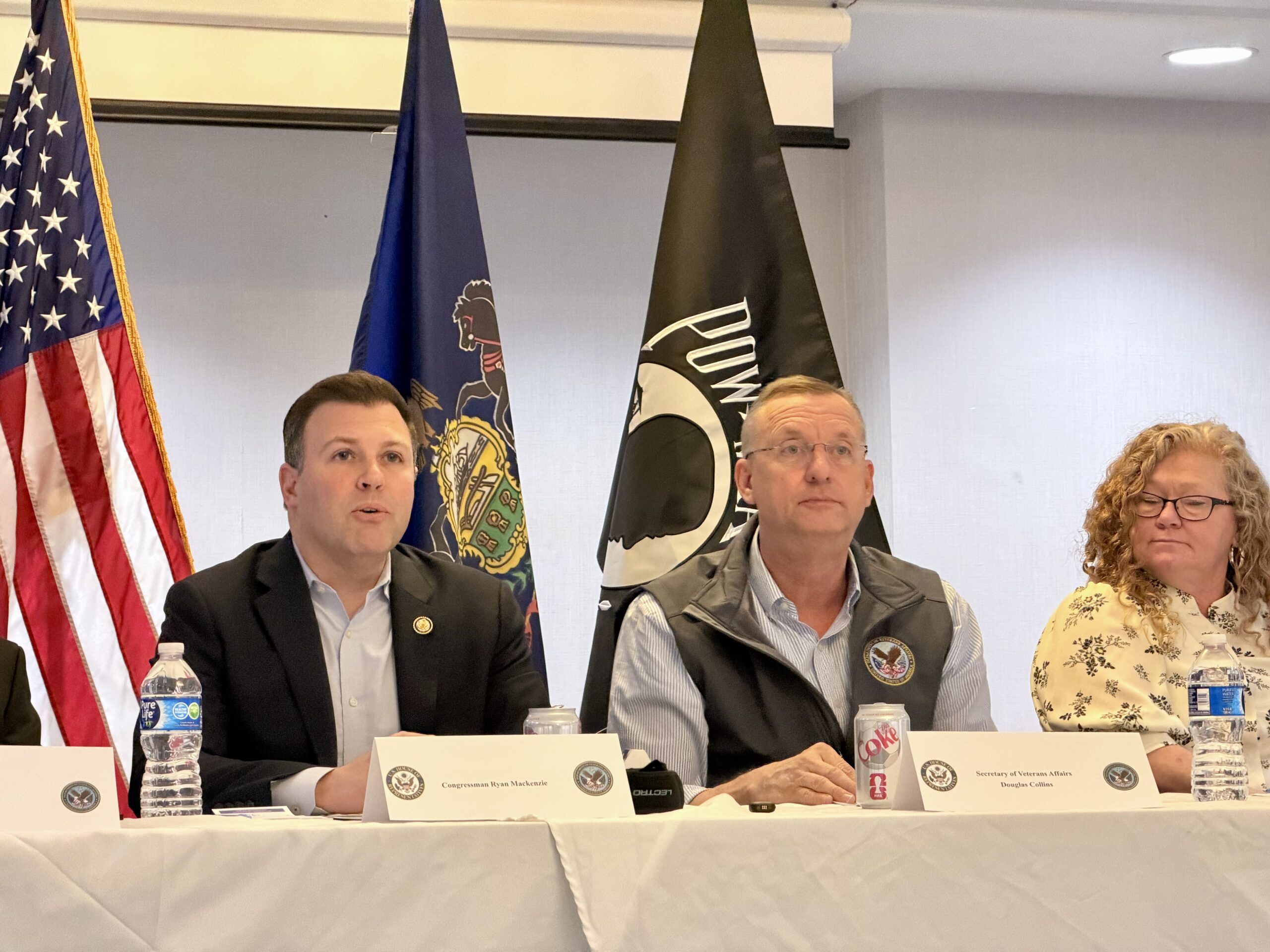
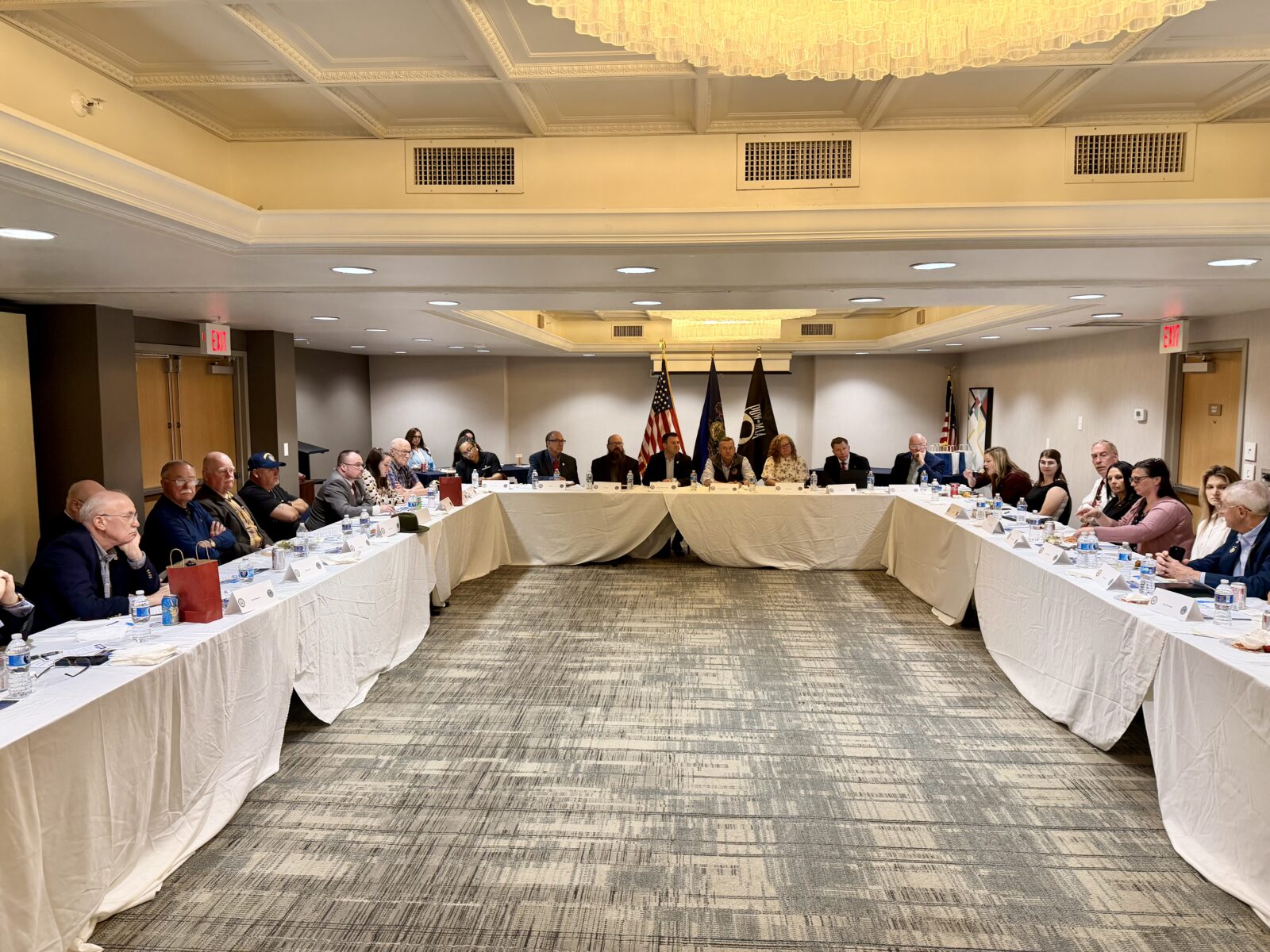
ALLENTOWN, Pa. — U.S. Department of Veterans Affairs Secretary Doug Collins joined Lehigh Valley veterans groups and U.S. Rep. Ryan Mackenzie for a roundtable at the Four Points by Sheraton Allentown on Monday, focused on a problem the region has been grappling with: veteran suicide.
The closed-door meeting, which press were allowed to attend for its final minutes, came four days after Mackenzie introduced bipartisan legislation aimed at identifying at-risk veterans — and as Collins pursues a restructure of the department he has run since February 2025.
Pennsylvania has the country’s fifth-largest veteran population, with nearly 700,000 veterans, according to the state Department of Military and Veterans Affairs, and Carbon County has the highest number of veteran suicides of any of the state’s 67 counties, according to the same agency.
Mackenzie reported to the press that the group’s two main areas of discussion had been data-driven suicide prevention and veteran outreach. After the meeting, he and Collins were scheduled to tour the Allentown VA Clinic.
On April 23, alongside New Jersey Congressman Josh Gottheimer, Mackenzie introduced the Data-Driven Suicide Prevention and Outreach Act.
The legislation
The legislation aims to establish a pilot grant program through 2029 to “support the development of new tools that can better identify risk factors associated with veteran suicide” and reach at-risk veterans outside the VA system.
The handout in front of each seat also flagged a second Mackenzie bill, the Improving Veteran Access to Care Act, introduced in November alongside Rep. Chris Pappas, D-N.H., which would direct the VA to streamline appointment scheduling across clinics, improve online self-service, and ensure veterans can still book by phone if they choose.
According to the VA’s 2020 National Veteran Suicide Prevention Annual Report, more than half of veterans who die by suicide are not in contact with the VA in the years leading up to their death.
A 2022 review by Yale and VA Connecticut Healthcare System researchers found that only 47 percent of all veterans are enrolled in the VA Healthcare system, despite the rate of suicide being 1.5 times higher among all veterans compared with the general population.
‘Heightened interest’ in Pennsylvania
“There are so many issues that face our veterans, whether it’s suicide, homelessness, mental health issues, but certainly, they center around the VA,” Mackenzie said. “And in many instances, what we talked about here was all healthcare-related.”
Collins said Pennsylvania, in particular, was an important area of focus.
“I think the biggest thing I take away from Pennsylvania is just the heightened interest in veterans,” Collins said. “I think it’s the interest of what I’d call the molecular level of how we help our veterans, and Pennsylvania and the communities and the folks sitting around this table have given real insights to issues that we talked about.”
Collins said he’s committed to reaching out to the country’s veterans and getting them in the system. He said more than 120,000 veterans had been added to the VA’s healthcare system in the first quarter of this year alone, and stressed the importance of connecting with young people.
The VA spends more than $500 million a year on suicide prevention, Collins said at the roundtable, but had been allocating those resources mostly to veterans already familiar with the VA. He said his goal was to redirect that outreach toward veterans outside the system.
That framing has drawn pushback. Russell Lemle, a former chief psychologist for the San Francisco VA Healthcare System and a senior policy analyst at the Veterans Healthcare Policy Institute, has argued in The American Prospect that more than half of the suicide prevention budget funds the Veterans Crisis Line, which by definition reaches the highest-risk callers — not just veterans already in the VA system.
Outreach to younger veterans
In 2022, veterans aged 18 to 34 had the highest suicide rates of all age groups, at 47.6 per 100,000, according to RAND’s 2025 perspective “The Rising Rate of Suicide Among Veterans,” which draws on VA data.
“Younger veterans in particular are not joiners as much; they don’t join organizations, they’re more action-oriented, so we’re looking into how we reach out to them,” Collins said. “60 percent of deaths by suicide occur among veterans who were not connected with the VA. We’ve had 120 thousand plus people already added to the healthcare system in the first quarter this year alone through an email system, text message system, that we had not deployed yet.”
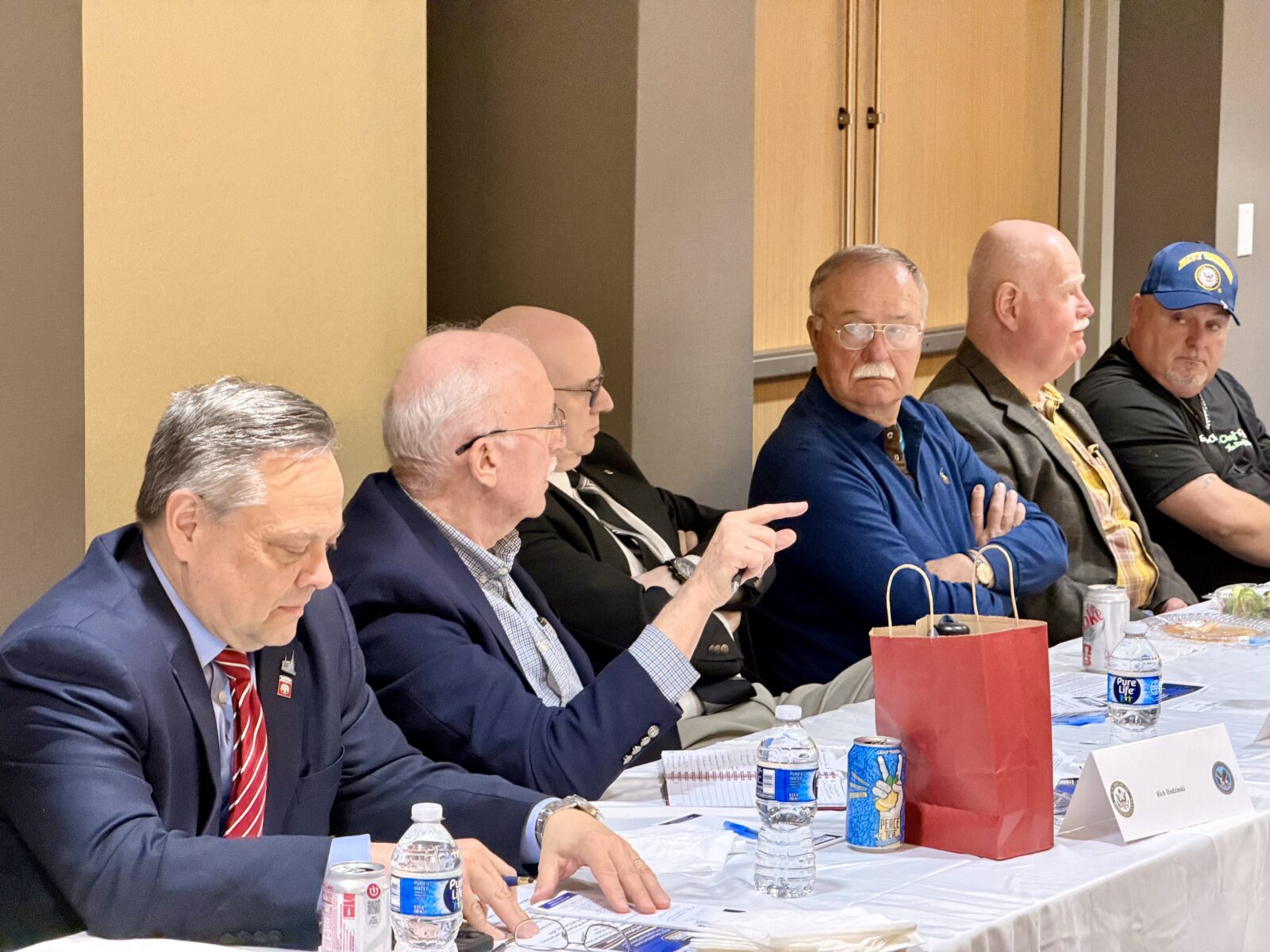
The same RAND analysis found that the suicide rate for female veterans was 92 percent higher than for nonveteran women in 2022. When Rich Hudzinski, the Lehigh Valley Military Affairs Council’s programs committee chairman, said the VA should focus especially on female veterans and their children, the room broke into applause.
A representative from Women Veterans Empowered & Thriving, a nonprofit reintegration program for women veterans, passed around cards promoting a two-part series about “warriors speaking their truth to their communities.” The series will perform its second act at the Inkwell on Hamilton Street on May 26, from 6 to 8 p.m.
Backlog claims and pushback
Collins also pointed to positive developments he saw in veteran services.
“As many times as we can discuss this issue of the things you can always highlight, and rightfully so — death by suicide, also our homeless — I also want to point out, around this table, all the good that is coming in our veteran services,” Collins said. “I’m excited to see new opportunities for our veterans and our healthcare in the research that we are doing. Our veterans in this country… have earned every bit of what we’ve got.”
Mackenzie also praised Collins for reducing backlogs in veteran claims since Collins took the role in February 2025.
A sheet placed by Mackenzie’s team in front of everybody’s seat cited “major improvements to VA Benefit Processing and Delivery,” including 3 million claims processed in FY2025, and more than 1.5 million claims halfway through FY2026.
The average number of days needed to complete a claim, the sheet said, has fallen from 141.5 days to 80.7 days since the start of the second Trump administration — a 43 percent decrease. In February, the sheet noted, the backlog of veterans waiting for VA benefits fell below 100,000 claims for the first time since 2020.
The Senate Veterans’ Affairs Committee Democratic staff report has questioned the cost of those gains. As of July, it said, the number of veterans asking the VA to take a second look at their claim had risen 44 percent because of errors made by processors stretched thin by staff departures.
“The VA secretary has done a great job over the past year plus of bringing down the backlog of so many cases,” Mackenzie said. “Working through claims is a big process and challenge, and so the secretary talked about some of the changes they’ve made, bringing down backlogs in cases, and then we heard about ways that we can still continue to improve that process.”
‘Chef Ski’
Albert Grochowski, a Navy veteran who from 1993 to 1996 was a chef on the USS Palo Alto and USS Detroit, cooked the day’s food.
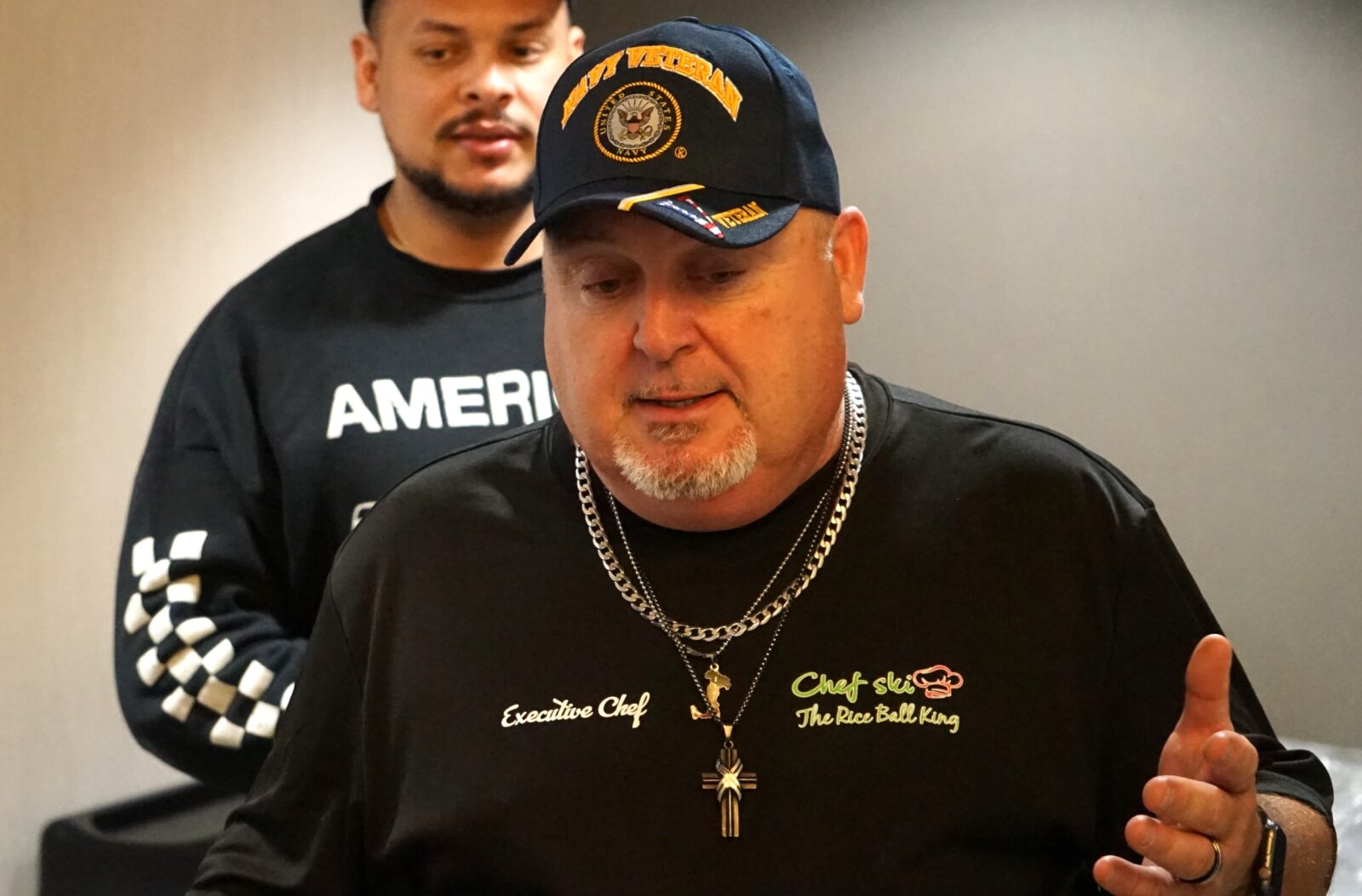
He operates a catering service called Chef Ski’s Catering. “Chef Ski,” said Collins, had sped up the system and spoke of his appreciation for the VA Community Care Program, which connects veterans with community providers if the VA itself is unable to meet their healthcare needs, and then reimburses that provider for the care provided.
“I’m a veteran, I use the system, but before they started using Community Care, it was so backlogged, like your appointment might be six months,” Grochowski said. “And I’m healthy, but some of these guys need that help. If I need to see a foot doctor, and the clinic right here doesn’t have one, they find one in the system, they approve one, you go there.”
Grochowski said he believes Collins, a former U.S. Air Force Reserve chaplain, cares about veterans.
“Doug Collins, you can see they care about veterans, and that’s all you can do.” He said it’s still possible to wait three or four months to get an appointment, but that they’re doing the best they can. “It starts at the top, and, hopefully, what they say they do. I think Doug Collins is a great guy, and he works with Trump, and Trump cares about the veterans.”
Restructuring the VA
Since taking over as VA secretary, Collins has pursued a restructuring of the department. In his first month in the role, the VA terminated about 2,400 probationary employees; all were later reinstated under federal court orders, though many were initially placed on paid administrative leave.
Collins announced in March 2025 that the VA was targeting cuts of about 80,000 jobs to return to 2019 staffing levels — a department-wide reduction in force that the VA later said in July 2025 was “off the table.” The department’s overall workforce has fallen by roughly 30,000 since the start of the Trump administration, due to resignations, retirements and attrition, the VA has said.
Collins has repeatedly faced dissent for his proposed “Restructure for Impact and Sustainability Effort,” or RISE, which would consolidate the department’s 18 Veterans Integrated Service Networks into just five and create new “health service areas” to handle day-to-day hospital and clinic operations.
U.S. Rep. Debbie Wasserman Schultz, D-Fla., the senior Democrat on the House subcommittee that funds the VA, told a Feb. 11 House Committee on Veterans’ Affairs hearing the plan would carry up-front costs of about $521 million in the first year and a net cost of $312 million over five years.
When asked how his plan would affect resources like the Allentown VA Clinic, Collins said it would only improve care.
“In our hospitals here, the executive directors and clinic directors will actually be able to do and manage what they need to do, without having to go send up ideas that never come back,” Collins said. “So, from my perspective, the average veteran around here is just going to see improved service in their hospitals, but from a VA perspective, we’re going to be able to put our assets where they need to be.”
At that hearing, Wasserman Schultz pressed Collins on how he would finance the plan. Collins said he would shift funds from “regular account funds,” and that the VA would “probably” submit a reprogramming request to Congress.
When Wasserman Schultz asked for another minute of questioning, House Veterans’ Affairs Committee Chairman Mike Bost, R-Ill., terminated the hearing.
Collins said the VA is operating within an outdated system, despite being one of the largest integrated healthcare systems in the country.
“We operate off of a 1990s model of management — in other words, we had too much upper-level bureaucracy that took away from our hospitals and clinics locally here to make the decisions that they needed to make,” Collins said at the roundtable. “We’re operating on a half-trillion dollar budget now with 450,000 people, we cannot continue to operate on a system that basically sort of crippled ourselves.”
Critics’ response
Critics of the plan, including Sen. Richard Blumenthal, D-Conn., the ranking Democrat on the Senate Veterans’ Affairs Committee, have argued that the consolidation will weaken the VA’s institutional framework.
A January 2026 report from Blumenthal’s committee staff, titled “Breaking the Pact,” detailed historic staffing losses and rising mental health care wait times across the department.
Critics also point to the VA’s own VSignals quarterly trust survey, which showed veteran trust in the VA reaching an all-time high of 80.4 percent in the first quarter of 2024 — up 25 percent from the survey’s 55 percent baseline in 2016, and before Collins took office. Rep. Mark Takano, D-Calif., the ranking Democrat on the House Veterans’ Affairs Committee, has voiced similar concerns.
Mackenzie spoke about his commitment to the valley’s veterans.
“When I first ran for Congress, I said if we are elected, we are going to do whatever we possibly can to help our veterans, and represent our community and our interests in Washington, D.C.,” Mackenzie said. “We are never going to rest, so even though we make progress, we want to continue to find out ways that we can improve our care for all of our veterans who have served our country so bravely and given so much.”
Grochowski summed up his view.
“You know, we all bleed red, we’re all human beings.”