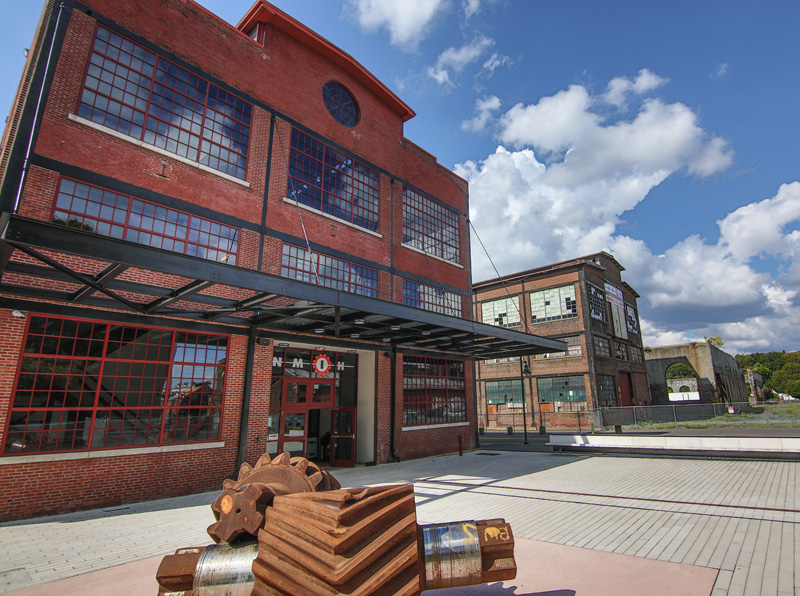
BETHLEHEM, Pa. — The National Museum of Industrial History has received a new addition to its archives: a collection of materials from the late Frank Fabian, a longtime Bethlehem Steel draftsman and local historian, and his wife, Bernice.
Fabian spent three decades with Bethlehem Steel Corp., primarily in the blast furnace and coke oven divisions. He gathered an array of documents, photographs and artifacts chronicling Bethlehem’s industrial and community heritage.
“These materials represent an important time of growth in the history of the Bethlehem plant, and we are indebted to Mr. Fabian and his family for preserving and sharing them to enhance the knowledge of future generations,” said Andria Zaia, president and CEO of the National Museum of Industrial History.
The newly acquired Frank and Bernice Fabian Collection includes photographs of Bethlehem Steel employees and projects, newspaper clippings, books and engineering drawings. The museum will preserve the materials as a resource for researchers and feature selections in upcoming exhibitions.
The collection heavily features Shimersville, a once-thriving mill village east of South Bethlehem.
Shimersville, active through the 18th and 19th centuries, harnessed water power from Saucon Creek as it flowed into the Lehigh River. In 1920, Bethlehem Steel acquired the village’s land and assets to support its plant expansion.
“The Fabian family is very grateful to the National Museum of Industrial History for this wonderful honor to our parents,” the family said in a statement.
A portion of the collection will be on display during the museum’s Steel Weekend event Oct. 11–12. The family also donated related materials to the Lower Saucon Historical Society, ensuring the Fabians’ dedication to preserving local history continues to benefit the community.