New federal loan caps could leave Lehigh Valley students facing major college funding gaps

On July 4, 2025, President Trump signed the congressional Republicans’ One Big Beautiful Bill Act (OBBBA), H.R. 1, into law. The legislation restructures the federal tax code, increases spending on immigration enforcement, and imposes sweeping limitations on mandatory federal spending.
Under the OBBBA, the federal government will permanently expand and extend provisions of the Tax Cuts and Jobs Act of 2017 (TCJA) across individual and corporate brackets. To finance those federal cuts and offset spending limits, the OBBBA authorizes the Trump administration to implement deep reductions in mandatory federal spending, including student loans and social safety net programs.
Specifically, Medicare will receive a $500 to $545 billion cut over the next 10-year period, a reduction projected to affect more than 10 million beneficiaries enrolled in the program. The Supplemental Nutrition Assistance Program (SNAP) faces approximately $186 billion in federal cuts, directly affecting 3.5 million recipients.
Starting July 1, the law imposes permanent annual and lifetime caps on Parent PLUS loans, a federal lending program that has long served as the borrowing mechanism of last resort for families whose children attend four-year institutions. Under the new framework, parents of undergraduate students will be limited to $20,000 per year in federal borrowing, with a lifetime ceiling of $65,000 per student, figures that, at many private universities, would not cover a single semester.
At Lehigh University, where the total cost of attendance exceeds $80,000 annually, the new federal borrowing limits will leave lower-income families facing a gap of tens of thousands of dollars, with no clear certainty about a federal remedy.
Stay informed on Lehigh Valley education
Get the latest education news and updates from across the Valley.
By subscribing, you agree to our Privacy Policy and consent to receive updates.
Jennifer Mertz, Lehigh’s Assistant Vice Provost of Financial Services and Director of Financial Aid, said the University had been preparing for the shift. “Our institutional grant funding approach remains grounded in our longstanding practice of meeting the full demonstrated need of our students at all income levels,” she said in a written statement to the Lehigh Daily News. “We will work closely with any affected students to ensure they have a clear plan in place to meet their educational expenses.”
Mertz pointed to the Lehigh Commitment, a program that provides full tuition coverage for students from families earning below $75,000 annually, as evidence of the university’s access mission. It remains unclear, however, whether that program covers the full cost of attendance, which includes room and board and additional fees that tuition coverage alone does not cover. The Lehigh Daily News did not receive clarification on that distinction.
Mertz did not respond to questions about how many Lehigh students would be directly affected by the caps, whether the University had increased its institutional grant budget in response to the federal changes, or whether affected families had been notified ahead of the July 1 deadline.
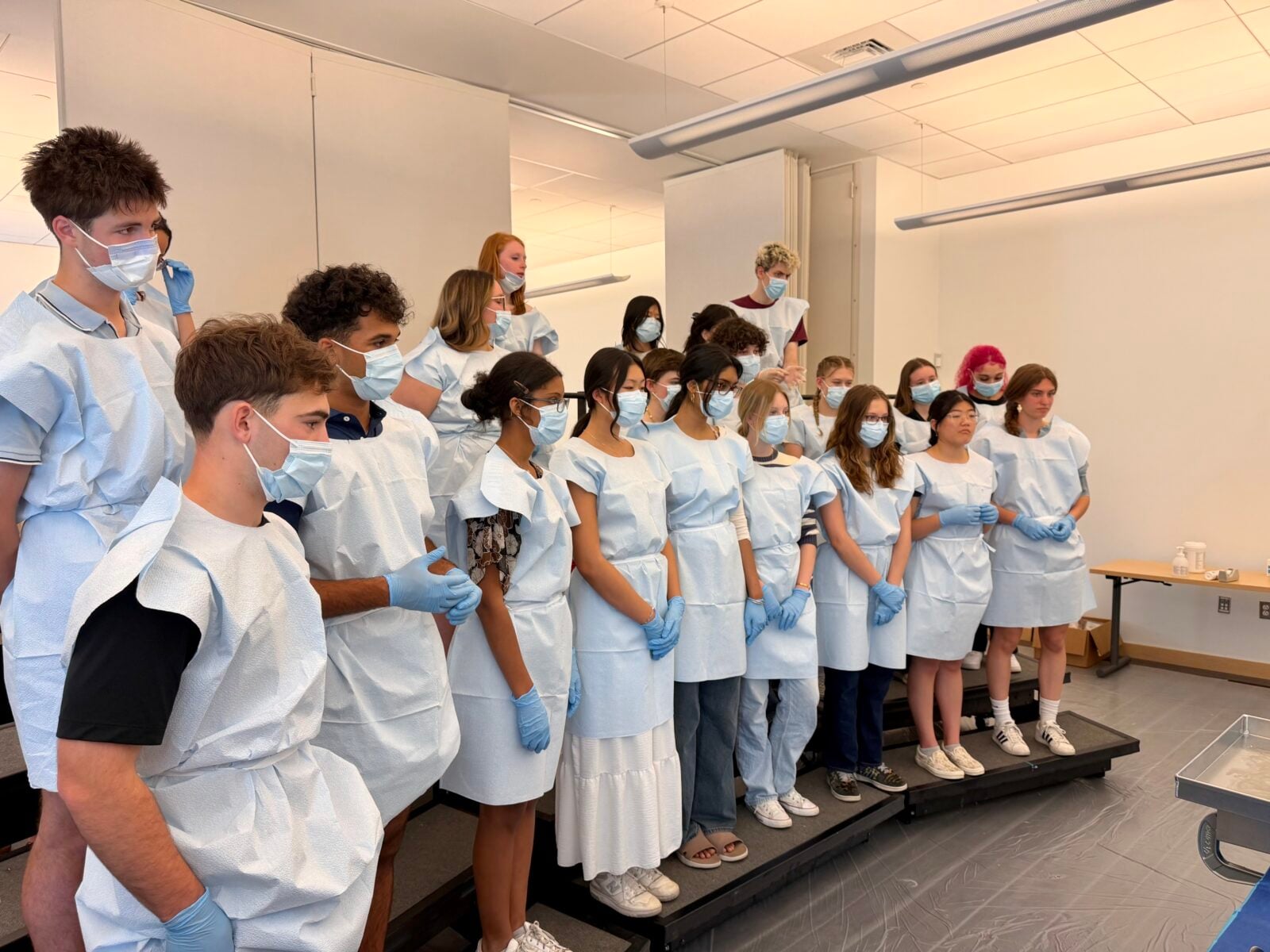
At Moravian University, a less conventional approach is in the works to alleviate the financial concerns of lower-income students enrolled in health sciences and related graduate programs, one that reflects how severely the new federal limits stand to affect clinical training pipelines.
The financial gap left by the OBBBA is substantial, according to data compiled by Clasp, a workforce infrastructure company that connects healthcare students with employers who repay their loans. David Kafafian, chief operating officer of Clasp and a former member of the U.S. Department of Education’s AHEAD federal advisory committee, estimates that the law will effectively remove $13 billion in federal student aid from circulation in its first year alone. Of that figure, $11 billion represents the graduate student gap; $2 billion reflects the undergraduate shortfall.
Stay informed on Lehigh Valley education
Get the latest education news and updates from across the Valley.
By subscribing, you agree to our Privacy Policy and consent to receive updates.
The private loan market, Kafafian noted, is structurally incapable of absorbing that gap. Historically, the private student loan market has generated roughly $10 billion to $11 billion annually, meaning the legislation would require it to more than double its output virtually overnight. That outcome, he said, is not realistic.
The barrier is not just supply. Approximately 73% of graduate student loans require a co-signer, Kafafian said, a requirement that disproportionately excludes first-generation students and those from low- to middle-income families. For those students, the private market is effectively closed. “If you’re a student who is first-generation and your parents haven’t established credit,” he said, “you’re likely not going to get the private loan you need to fill out your cost of attendance. And so you’re left deciding: Am I not going?”
Graduate students in clinical health programs face the sharpest exposure. The law effectively limits most advanced practice healthcare students, including those enrolled in nursing, physical therapy, occupational therapy, and speech-language pathology programs, to $20,500 per year in federal borrowing, the same ceiling applied to undergraduate degrees. Kafafian described those programs as “the ones that are most at risk.”
One provision does offer a degree of near-term protection for current students. A grandfather clause embedded in the law means that students who have already borrowed under Parent PLUS or Grad PLUS for a degree they are actively completing will not be subject to the new caps for that same degree. New enrollees starting this fall, however, will face the full weight of the restrictions.
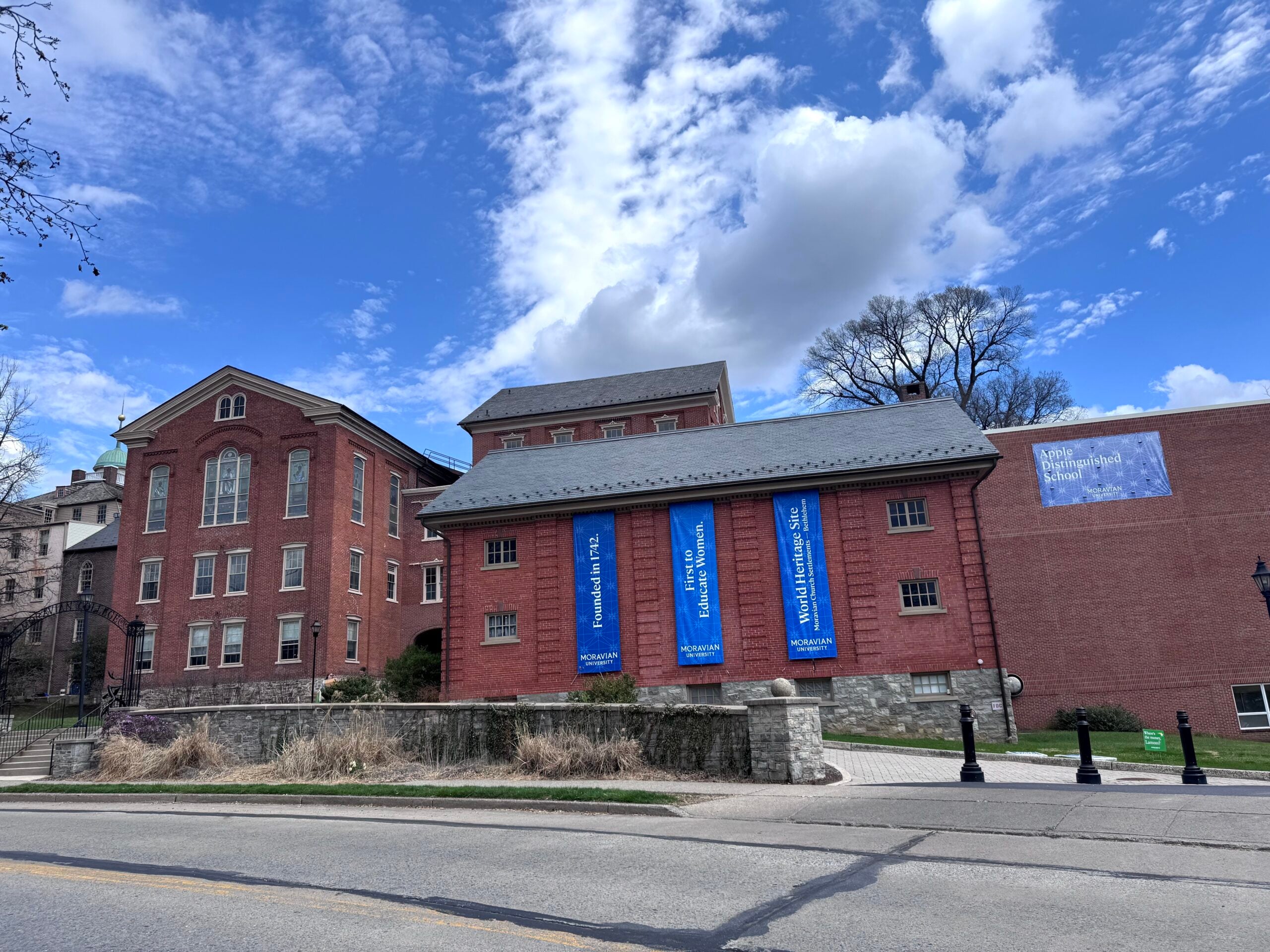
At Moravian, where health professional programs in nursing, physical therapy, occupational therapy, and speech-language pathology form a significant part of the University’s academic profile, administrators have spent the past year developing alternatives to federal borrowing.
Louise Keegan, Moravian’s Associate Provost and Interim Dean of the College of Health, said the University’s concern is less about the institution than about its students. “I am worried that it might impact Moravian,” she said. “But not so much Moravian — the students. Students currently enrolled in our undergraduate programs may not be able to get the same federal support for their graduate programs.”
In response, Moravian has pursued two parallel strategies. The first is a loan comparison portal currently in development, built in partnership with an external company and housed within the University’s own systems, that will allow students to evaluate and compare private lending options side by side. The second is a formal partnership with Clasp, initiated after Clasp connected with President Grigsby, the university’s enrollment team, and the College of Health.
Clasp raised $20 million in a Series B funding round in March 2026, with the stated aim of expanding its university partnerships and scaling its infrastructure as federal loan caps take effect. The company’s model connects students with healthcare employers who commit to repaying a portion of their loans over time in exchange for tenure, similarly to the military’s ROTC model.
Four programs are currently eligible for Clasp’s employer network at Moravian: nursing, physical therapy, occupational therapy, and speech-language pathology. Employer repayment commitments vary by role. Nursing students may be eligible for up to $50,000 in loan repayment, while speech-language pathology students may qualify for up to $36,000, depending on the employer’s relationship with Clasp.
Keegan was direct about what the partnership does and does not represent. Clasp provides no financial support to the institution itself, she said; its role is connecting individual students with employers who will repay their loans post-graduation. “We share information about Clasp with our students and say, ‘Hey, Clasp is available,’” she said. “Our students make decisions as to whether they sign up with Clasp to look for these employers.”
On the question of tuition increases, Keegan was unequivocal about the present but cautious about the future. Raising tuition for health programs is not under discussion, she said, in part because the University is already focused on ensuring students can afford to attend.
She noted that Moravian has a high proportion of first-generation students, and affordability is central to the institution’s mission. Whether tuition could change in future academic years, she added, is ultimately a decision for the board of trustees in consultation with the president and chief financial officer.
Kafafian, who observed federal policymaking after serving on the Department of Education’s AHEAD advisory committee, offered a blunt assessment of what the legislation accomplishes and what it leaves unresolved.
He acknowledged that some degree of federal loan reform was defensible on policy grounds; unlimited borrowing under Grad PLUS and Parent PLUS had, in his words, been “over-indebting families in a predatory way.” However, the specific design of the OBBBA’s caps, he said, imposes consequences that fall unevenly.
Clasp has estimated that separate changes to federal PLUS loan caps under the OBBBA could leave some graduate clinical degree programs facing funding gaps of 40% to 85% of total program costs.
For Lehigh Valley students weighing whether to enroll in a four-year private health professional program this fall, Kafafian said the calculus has shifted, but the career case remains strong. Clinical healthcare roles are growing at 5% to 15% annually, he said, with significant open capacity in the current job market.
The financial pressure is real, he added, but ignoring it is not a strategy. Students, he said, should know who their loan servicer is, select a repayment plan, and build a post-graduation budget that accounts for monthly loan payments.
The broader question of whether small private universities in the Lehigh Valley are structurally positioned to survive a sustained reduction in federal student lending remains unanswered. Keegan said Moravian has been sharing information with peer institutions through its LVAIC partnerships and monitoring developments closely. What adaptation looks like at scale, for institutions and students alike, will become clearer after July 1.
Stay informed on Lehigh Valley education
Get the latest education news and updates from across the Valley.
By subscribing, you agree to our Privacy Policy and consent to receive updates.